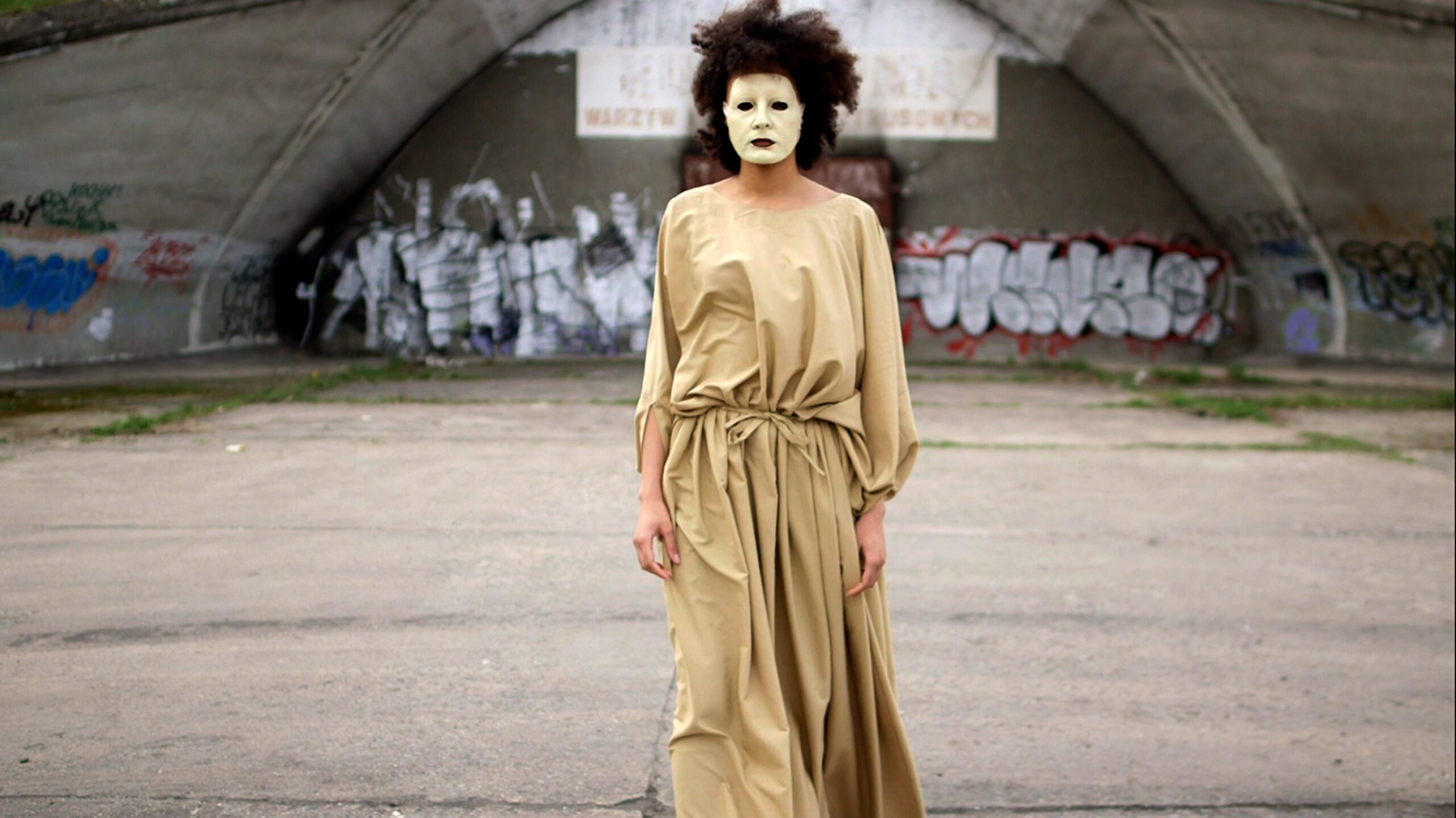
The Wolves Prowl
2015/2016, audio-video, 00:47:31
directed, written, and costumes by Marta Węglińska; cinematography by Marcin Ptaszyński and Maciej Rudzin; actors and performers: Sylwia Achu, Julia Poziomecka, Paula Głowacka; narrator: Paulina Miu Zielińska; music by Marta Knaflewska; text editing and film production support by Tobiasz Jędrak
“The Wolves Prowl” is an experimental video film in the form of a poetic essay, which reinterprets the structure of ancient Greek tragedy as a tool for reflection on the contemporary human condition. The film explores timeless categories such as fate, chance, tragic conflict, and catharsis, presenting them as active forces circulating between different orders of time – ancient and contemporary.
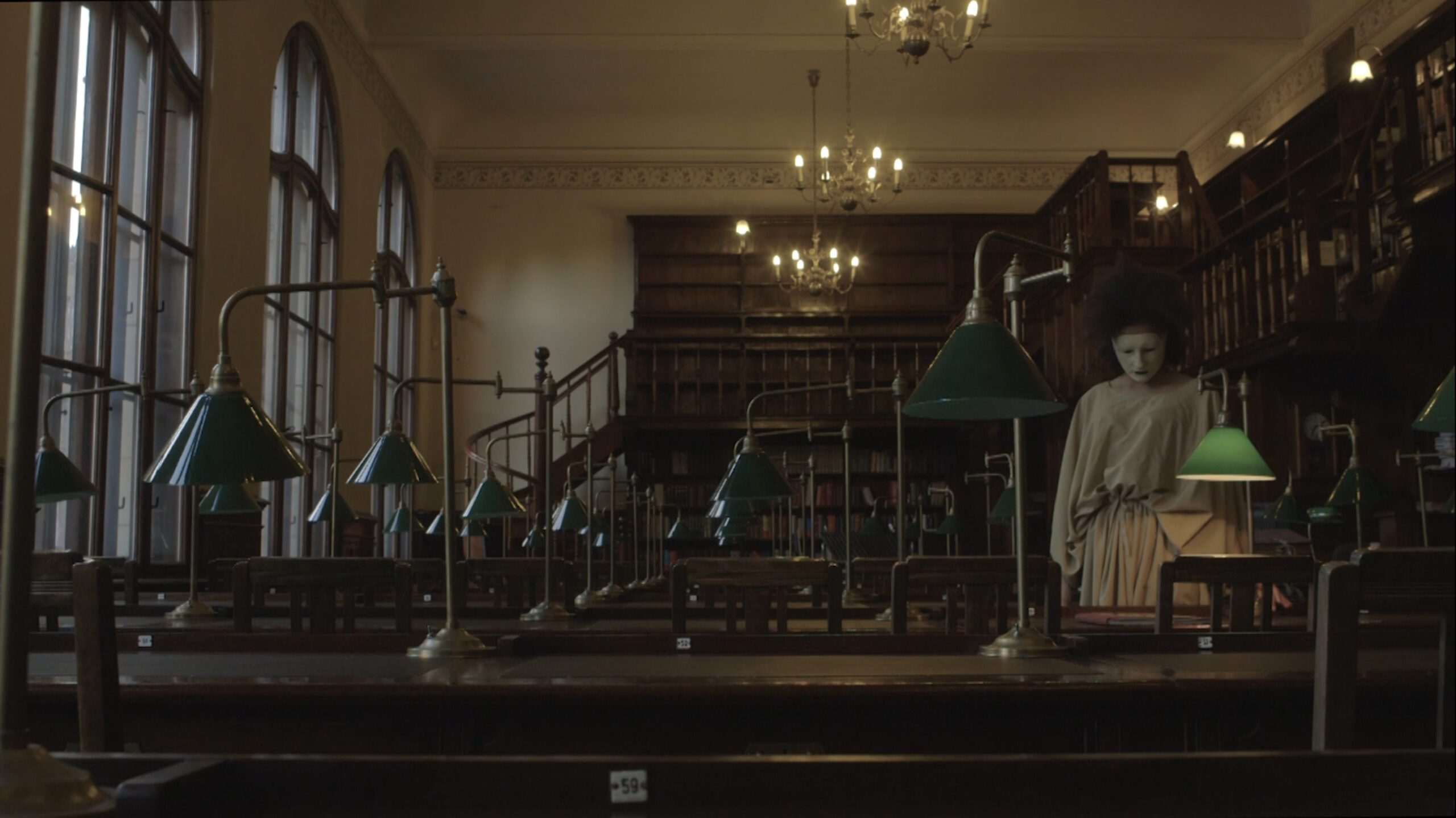
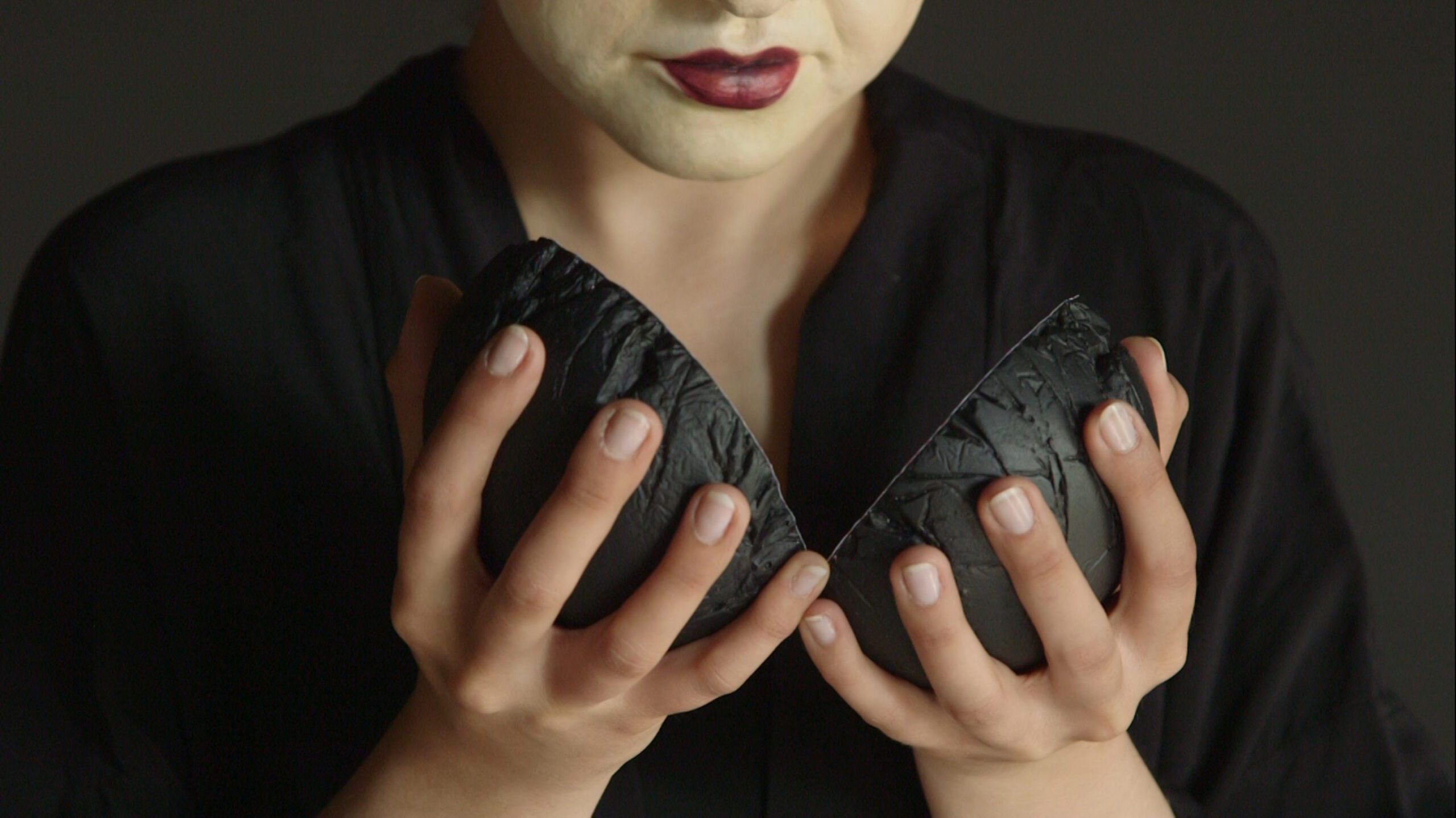
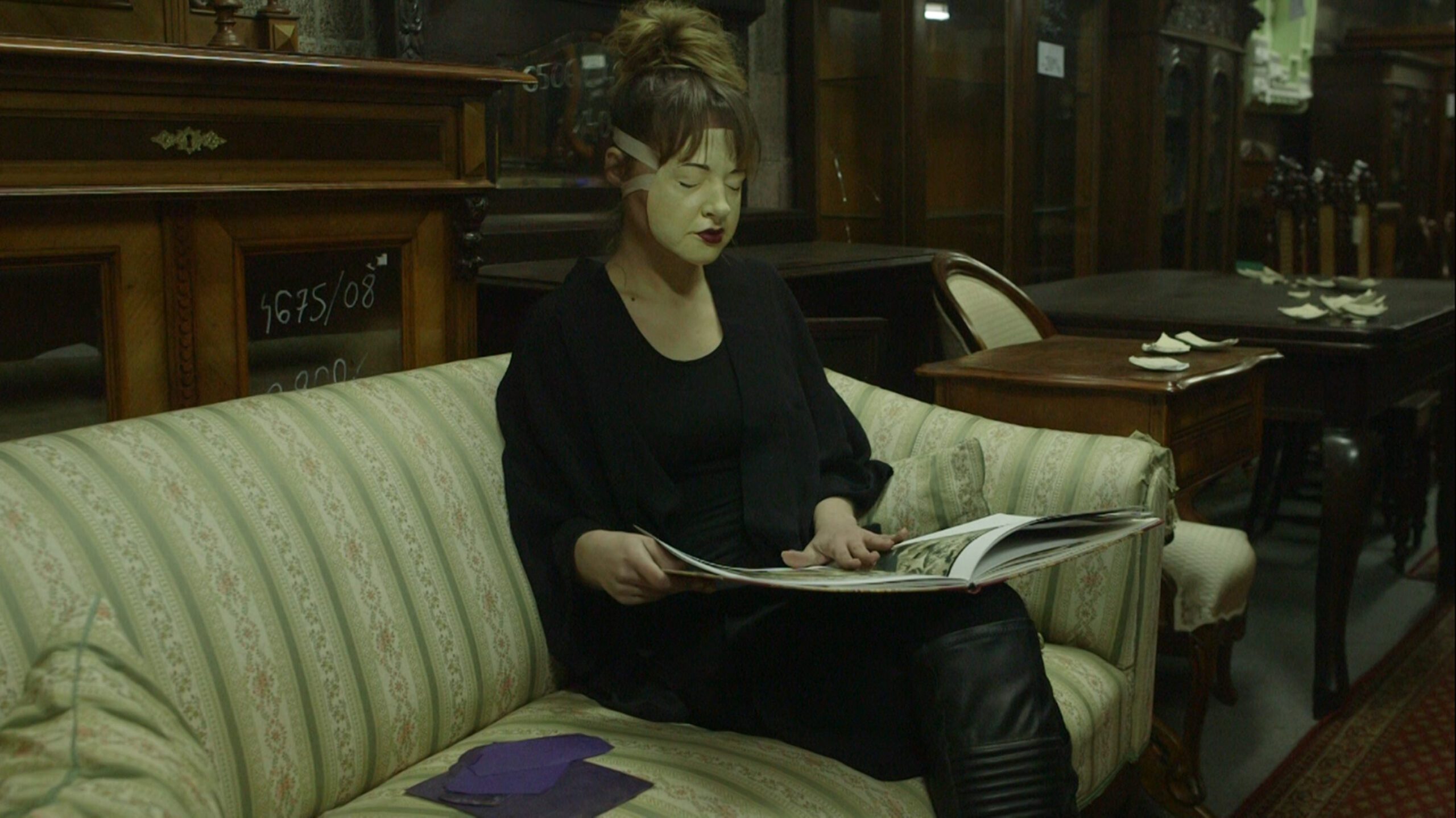
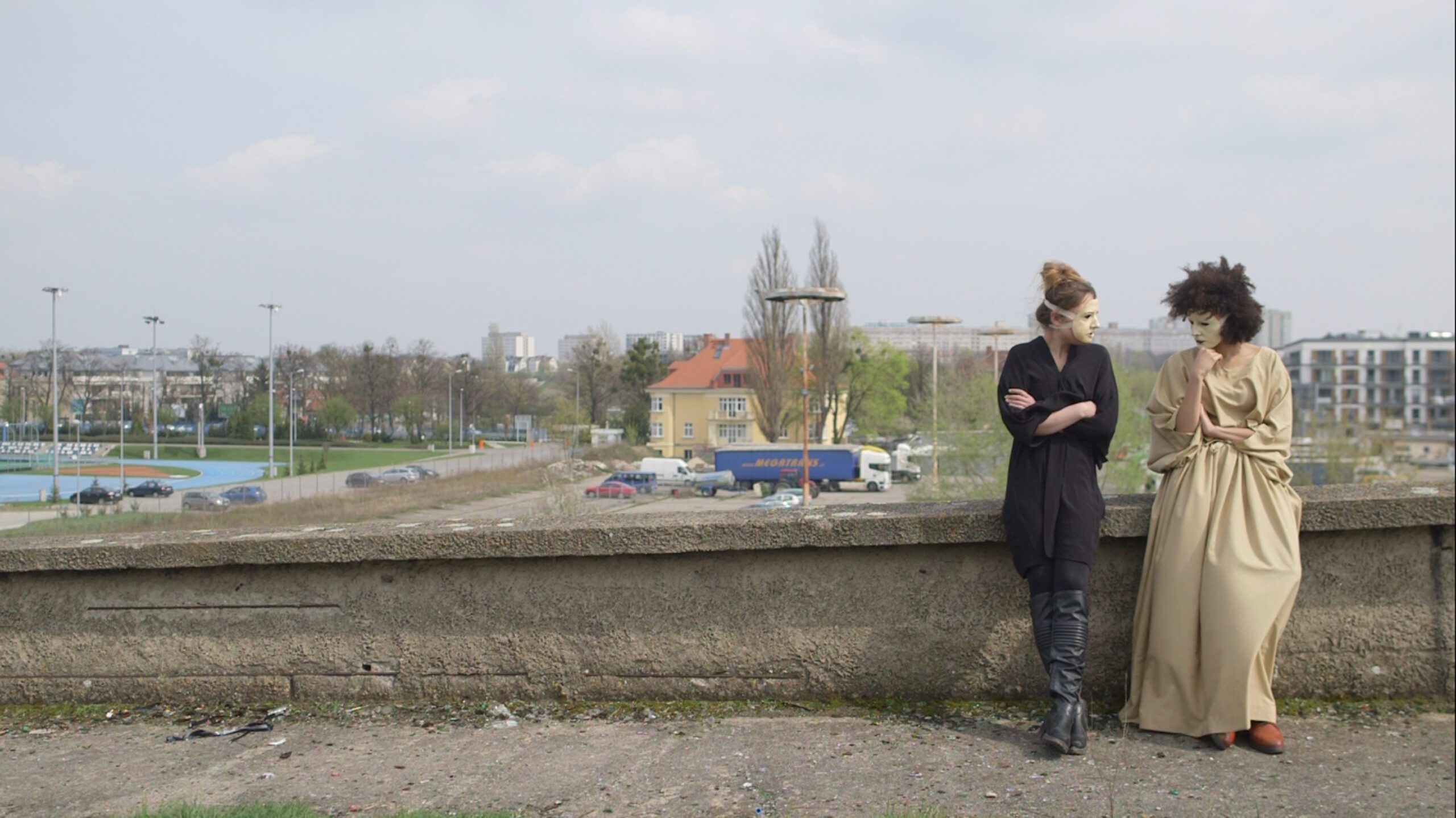
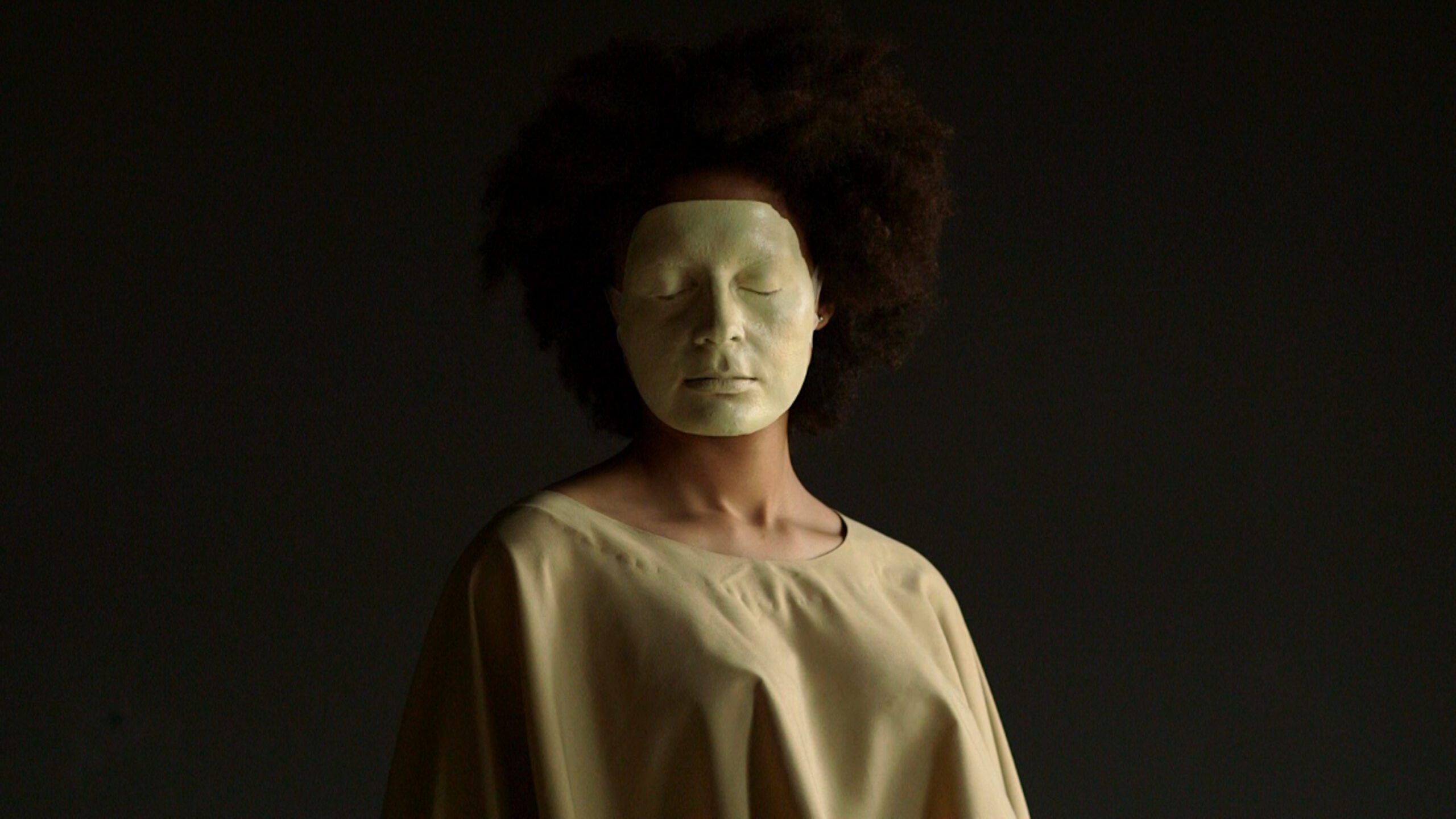
The narrative focuses on three female characters: Ataran – a caryatid figure, a symbol of stability and knowledge; Julie – a contemporary rebel, a provocateur immersed in the present; and Julie (Le Double) – her alter ego. Their relationships and dialogues build a polyphonic story about identity, body, voice, and agency of the individual in a world subject to constant tensions and changes.
The voice – individual and collective – plays a key role in the film, treated as a carrier of memory, body rhythm, and the experience of time. The dialogues do not illustrate the image, but construct a space of meanings in which language, myth, and performance become tools of cognition. The film operates in a non-linear time, in which the past is not a closed history, but a living structure that returns in new configurations.
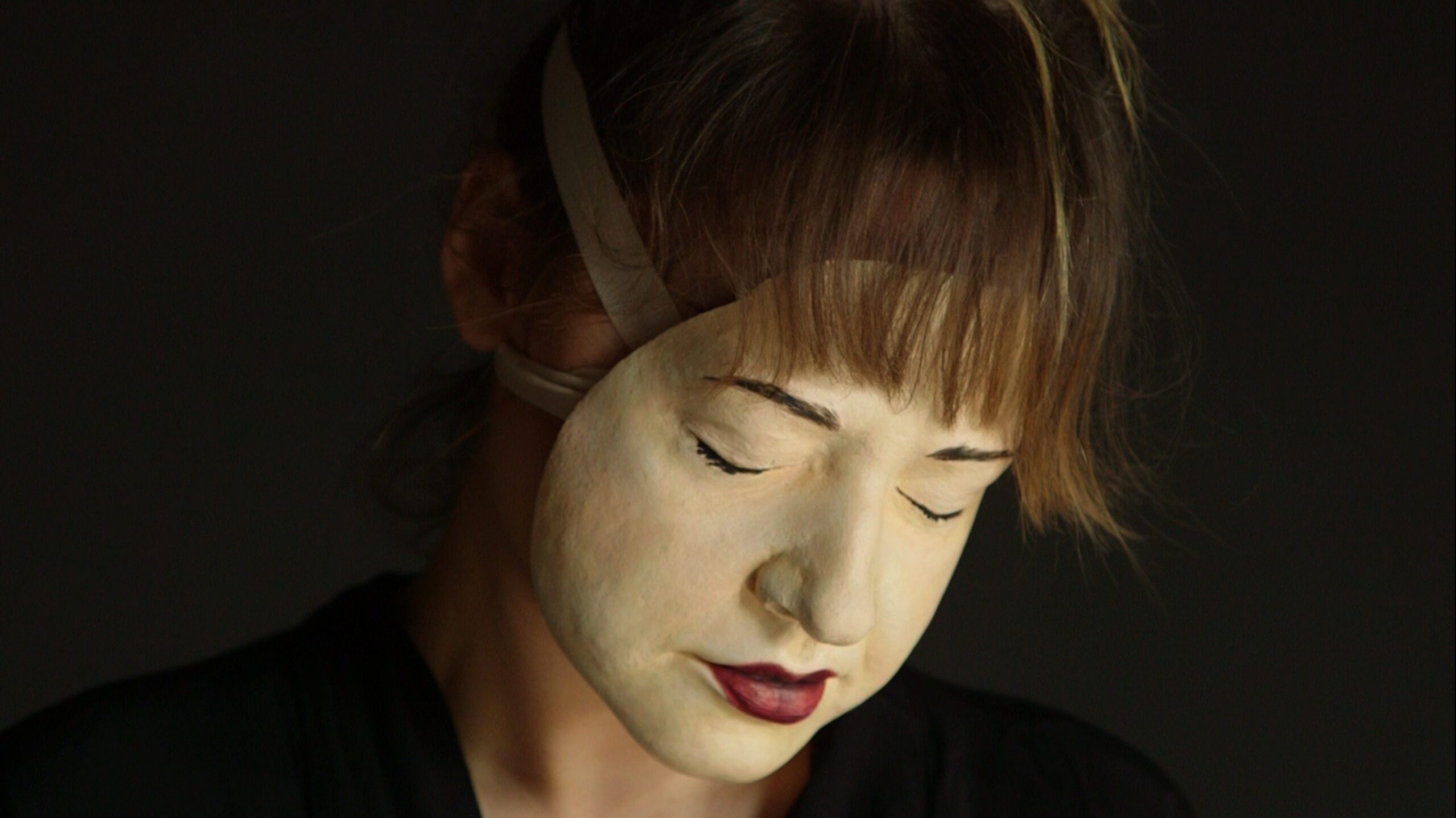
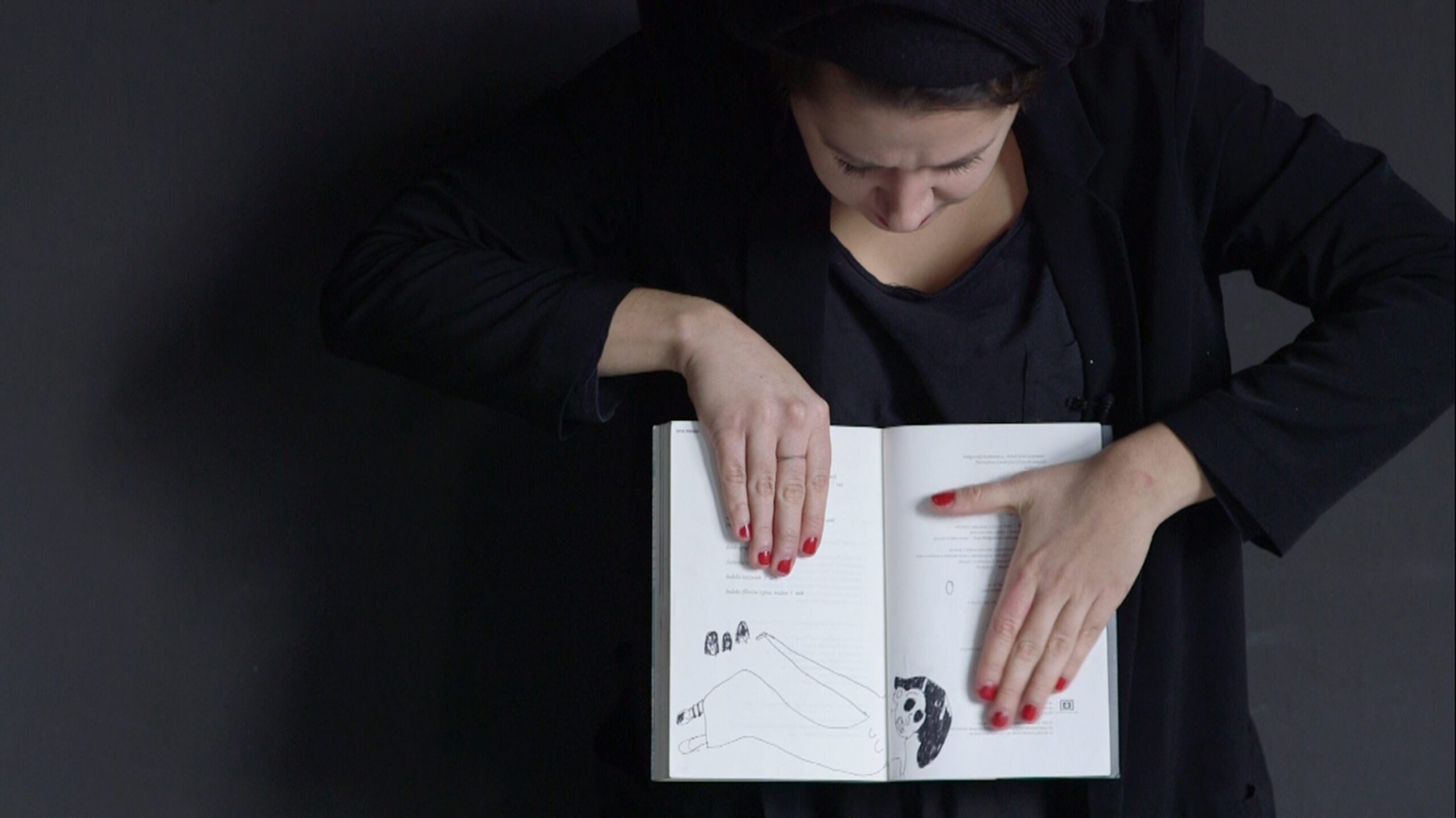
Formally, "The Wolves Prowl" draws on theater (masks, the conventionality of space, the rhythm of speech), performance, and experimental cinema. Directed scenes are intertwined with fragments of performative actions and interviews, and liminal spaces – a degraded landscape, abandoned architecture, an antique shop, and a library frozen in time – become the stage for a contemporary tragedy.
The wolves in the title function as a metaphor for universal, primal forces: time, gravity, knowledge, intuition, good and evil, which constantly “roam” between eras, orders, and human experiences. The film can be interpreted as a reflection on the repetitiveness of human destinies and on how ancient structures of thought still organize contemporary reality.