Spirit of Water. The Body of the River
2026 | site-specific performance on the Krutynia River, DOwód Festival, 2026 Concept and realisation: Marta Węglińska Performers: Marta Węglińska, Bożena Bujnicka and a group of performers
Photo documentation: Gaba Mielżyńska
Idea
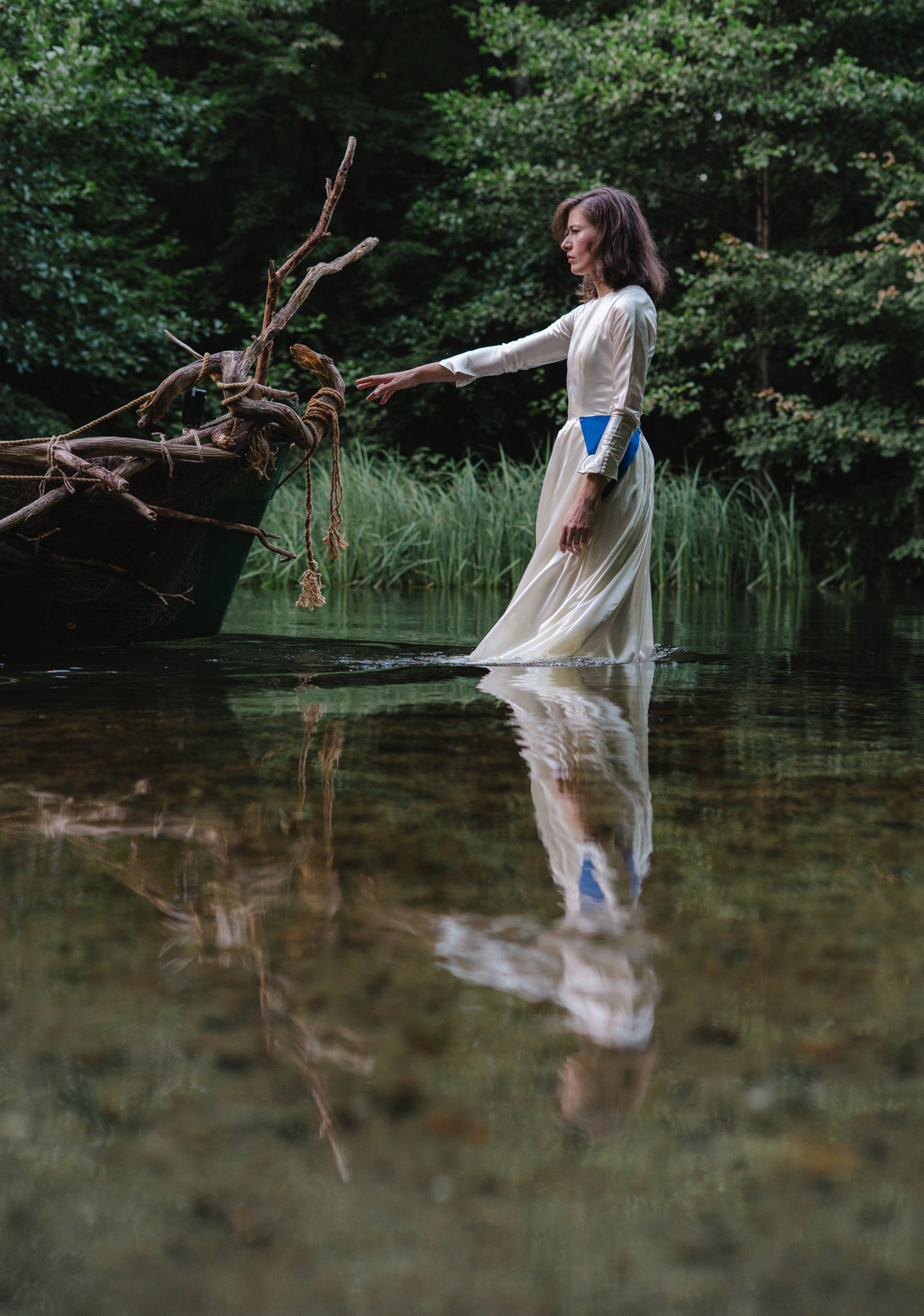
Spirit of Water. The Body of the River is a contemplative performative event realised within the landscape of the Krutynia River. The performance took the form of subtle, dreamlike interventions embedded in the natural environment. Voice, singing, text, performance and living images were combined with the rhythm of the river and its surroundings.
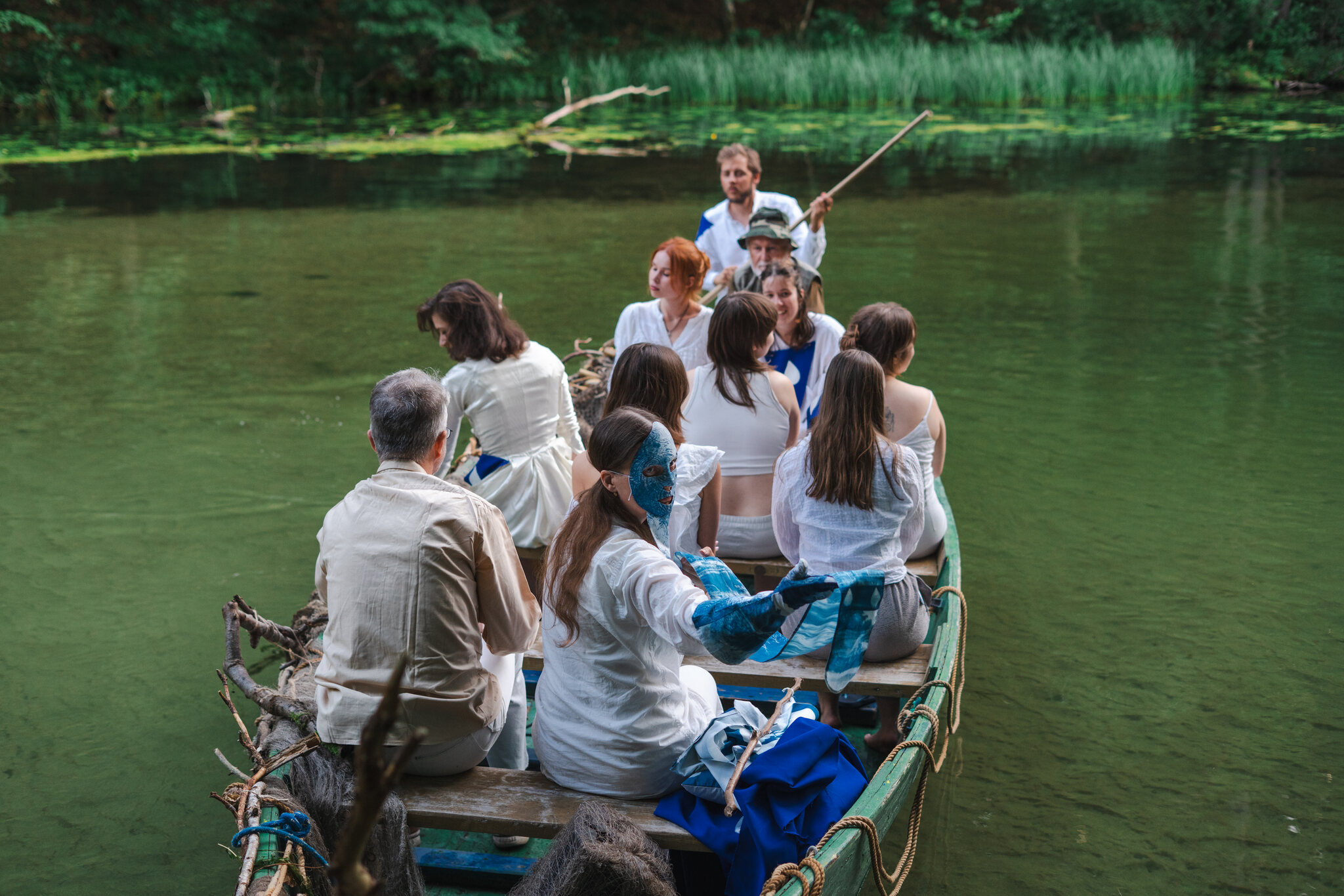
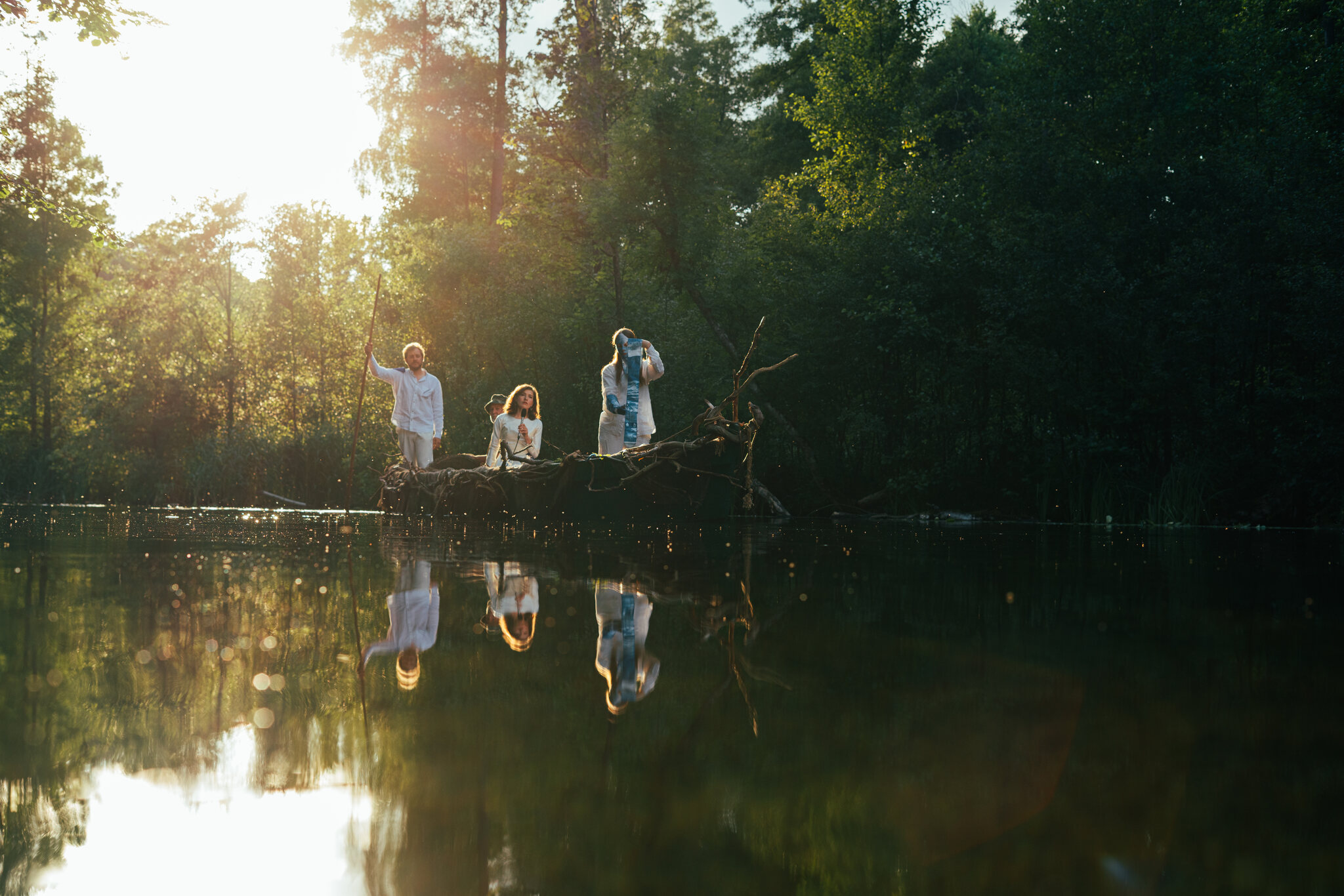
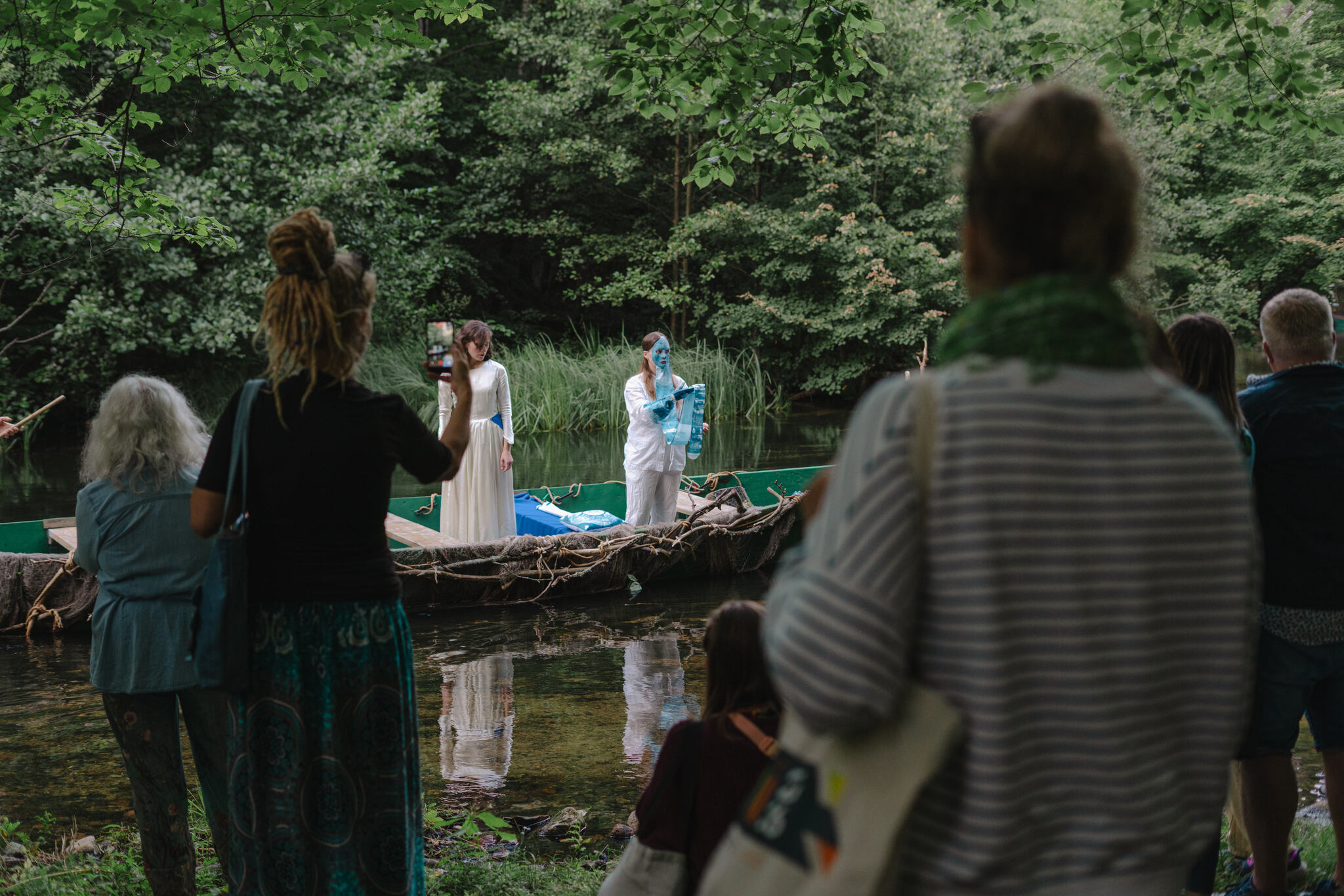
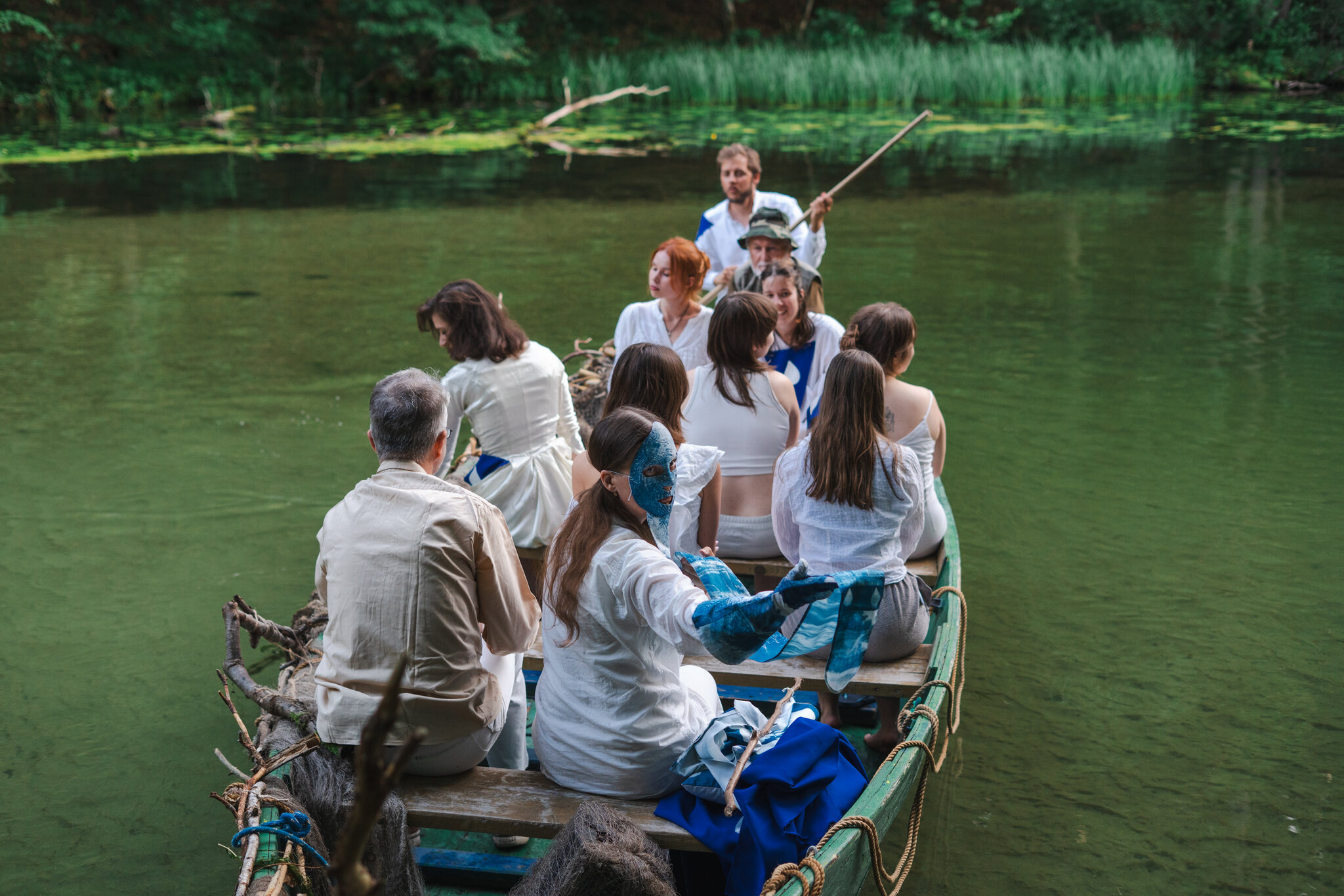
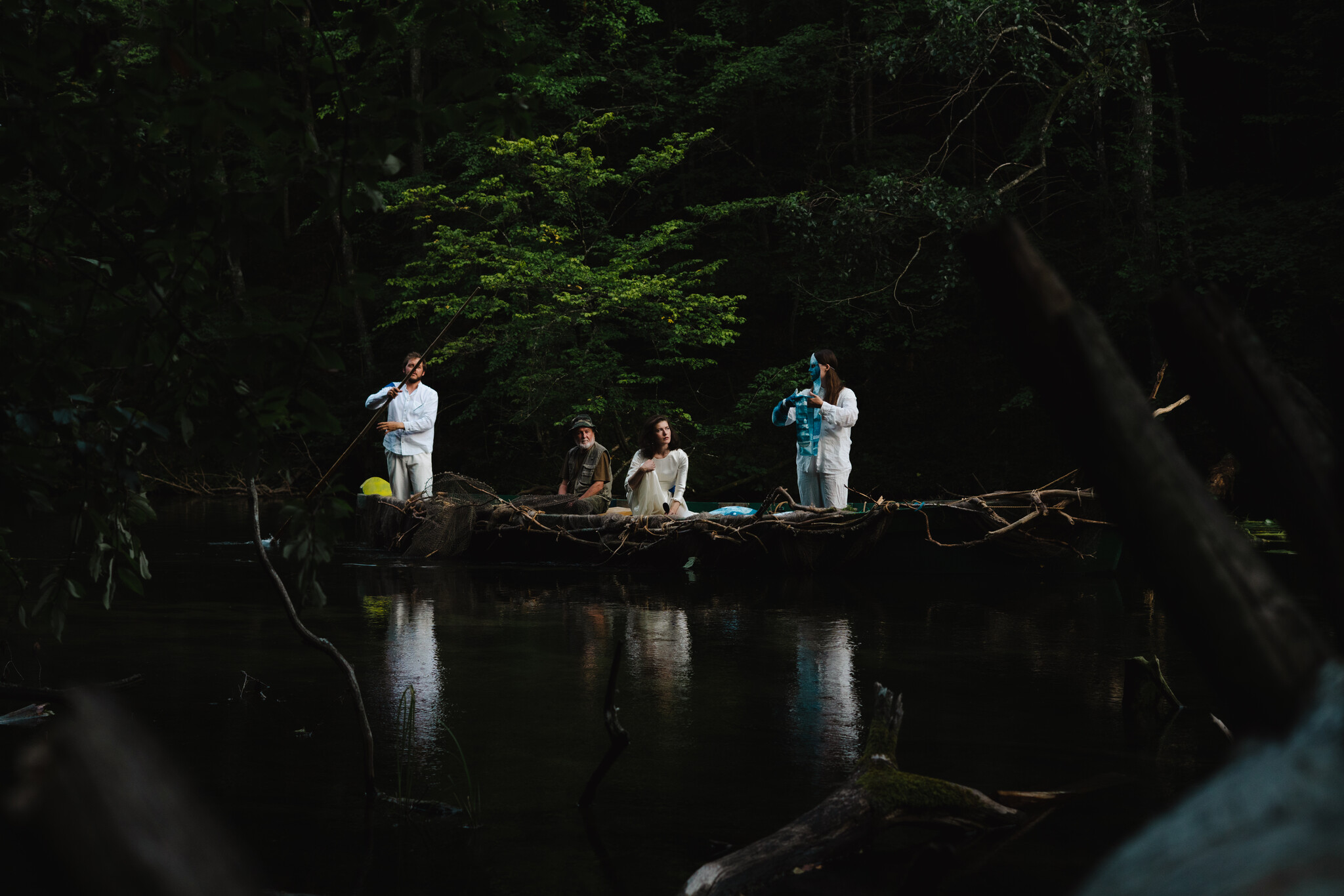
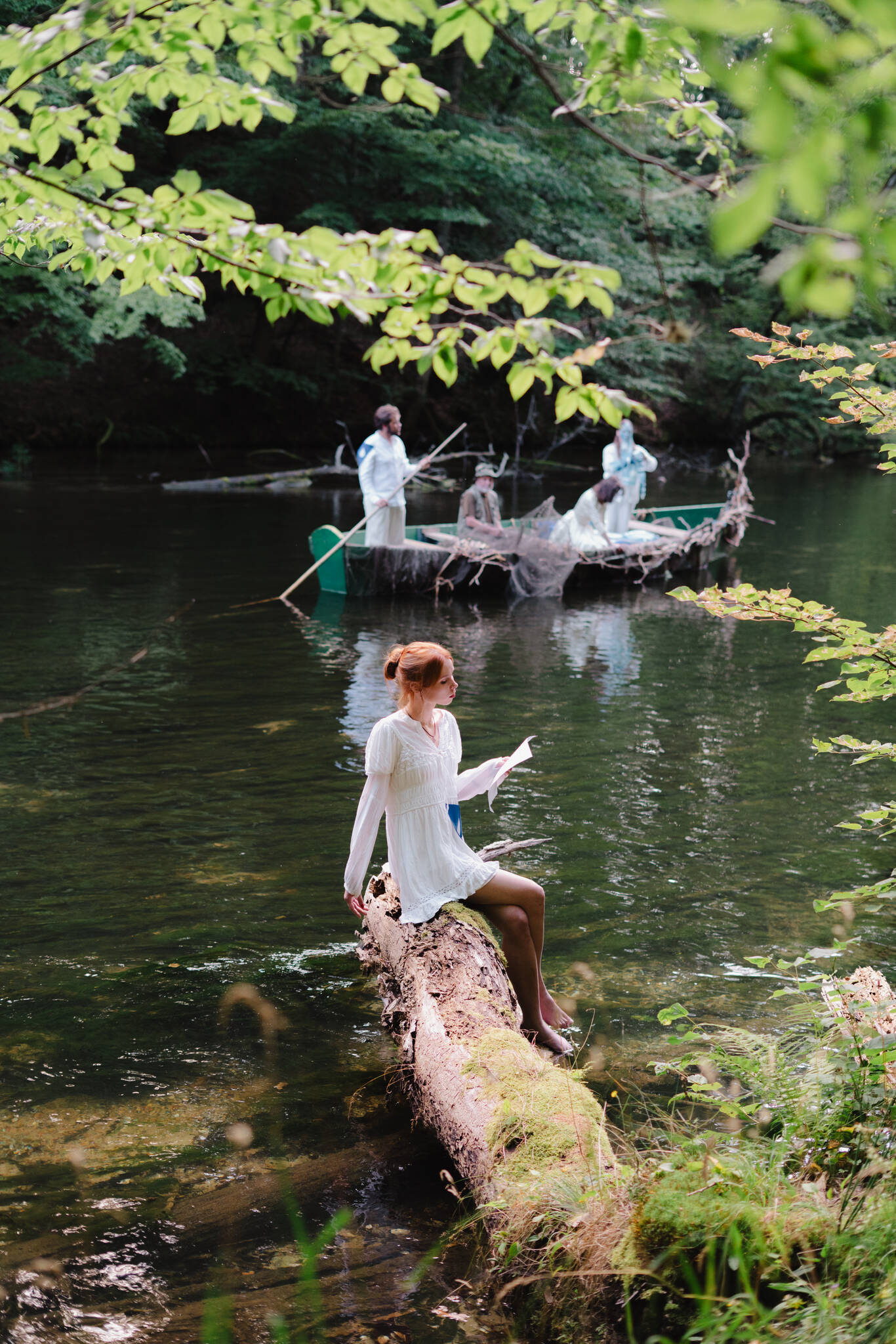
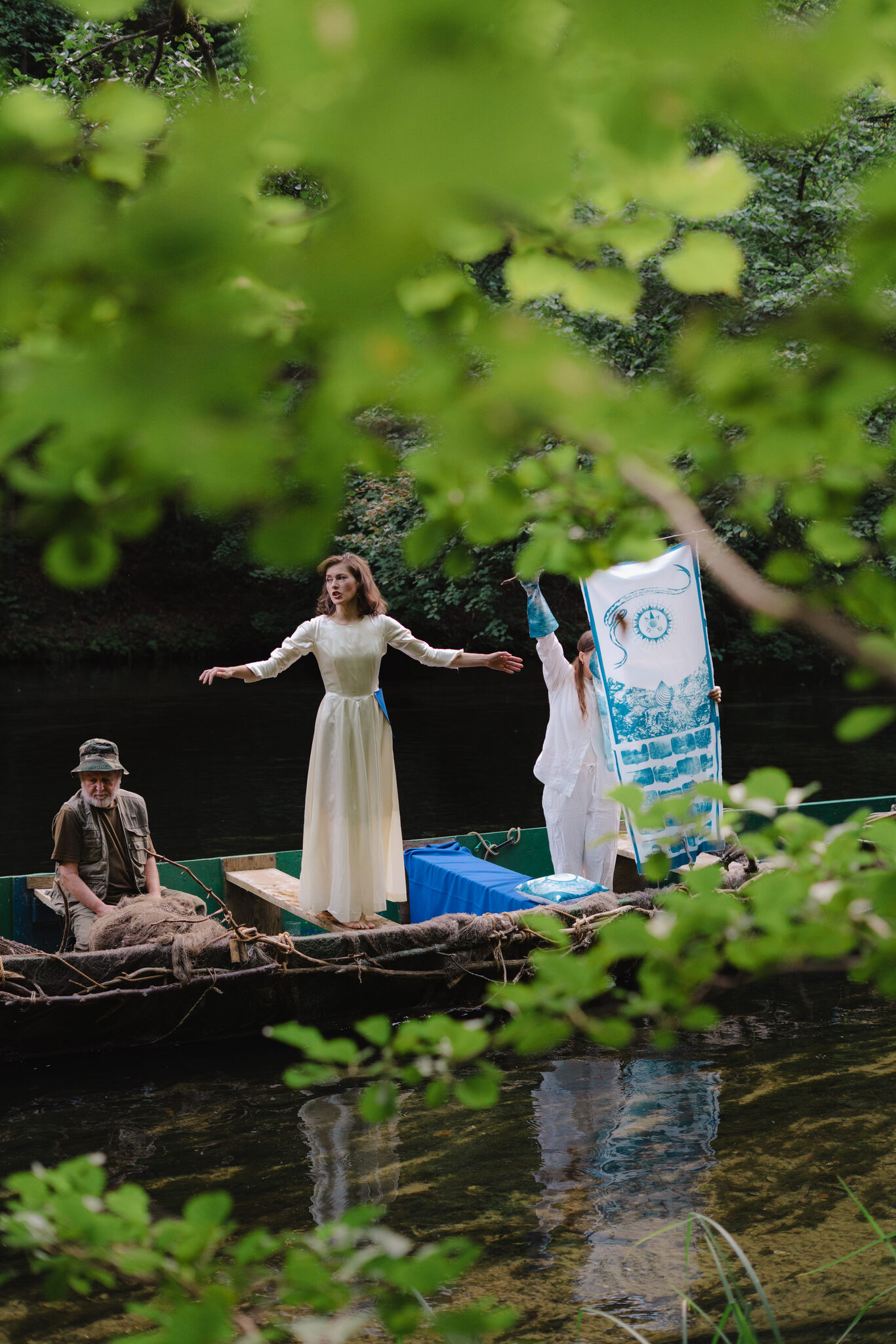
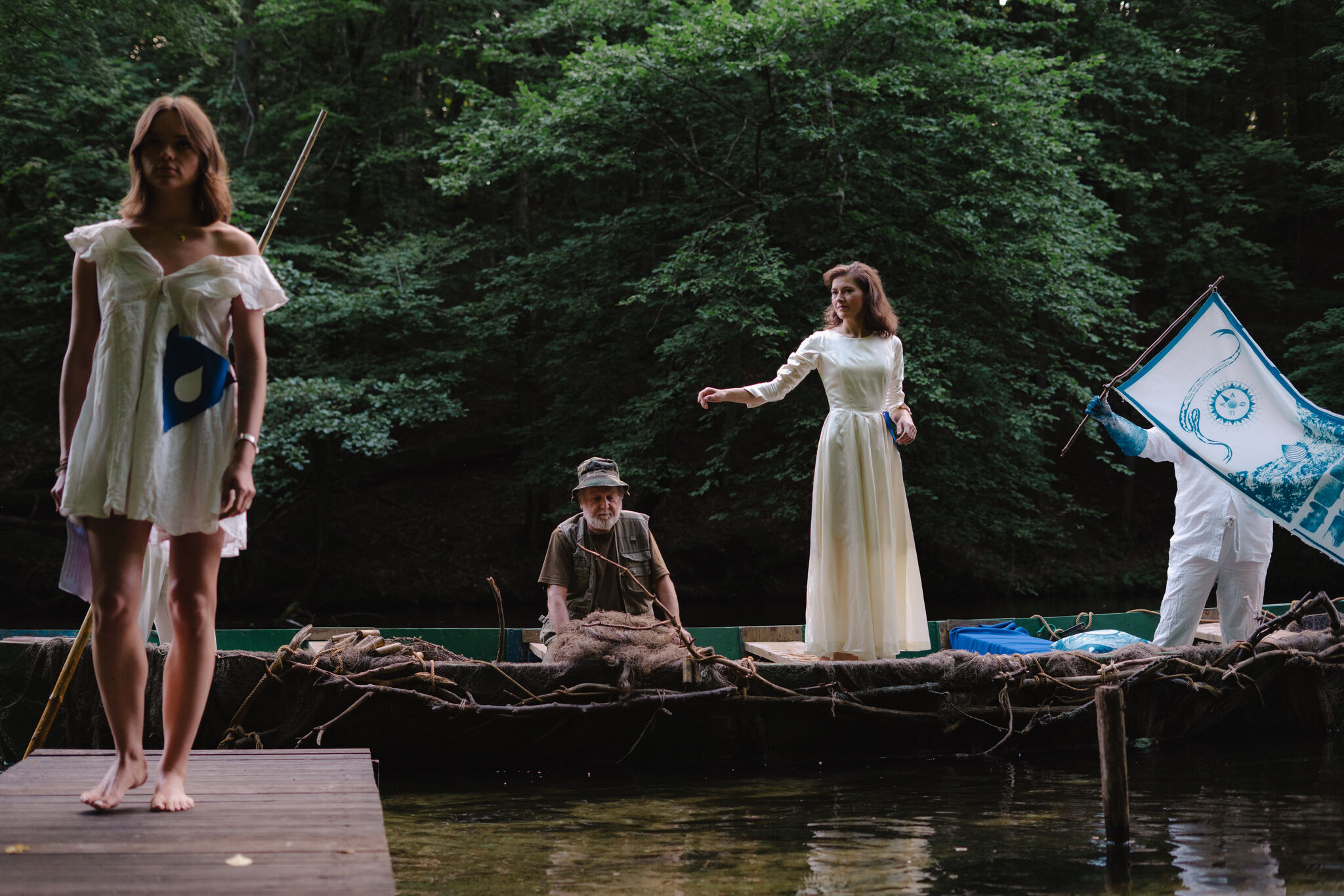
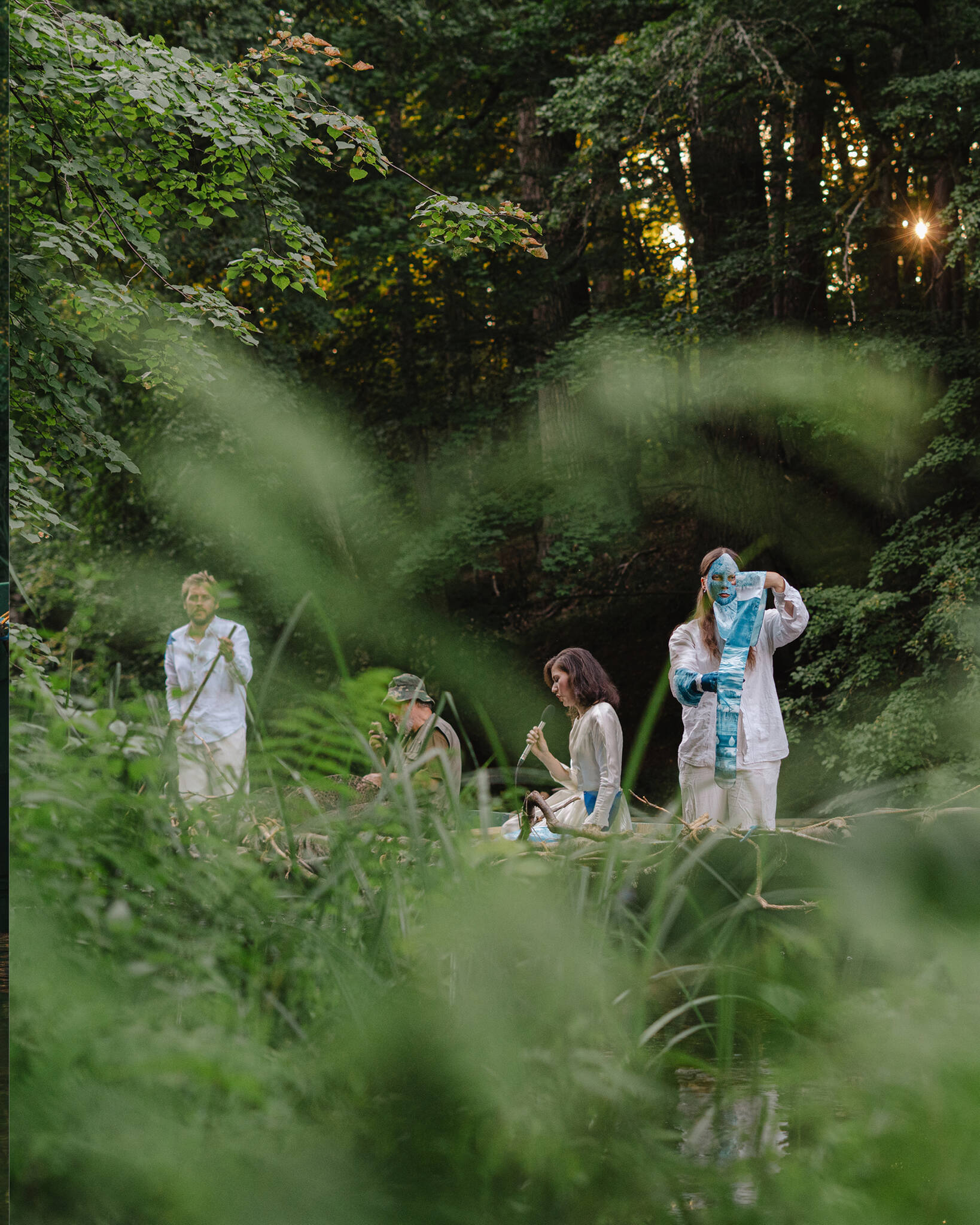
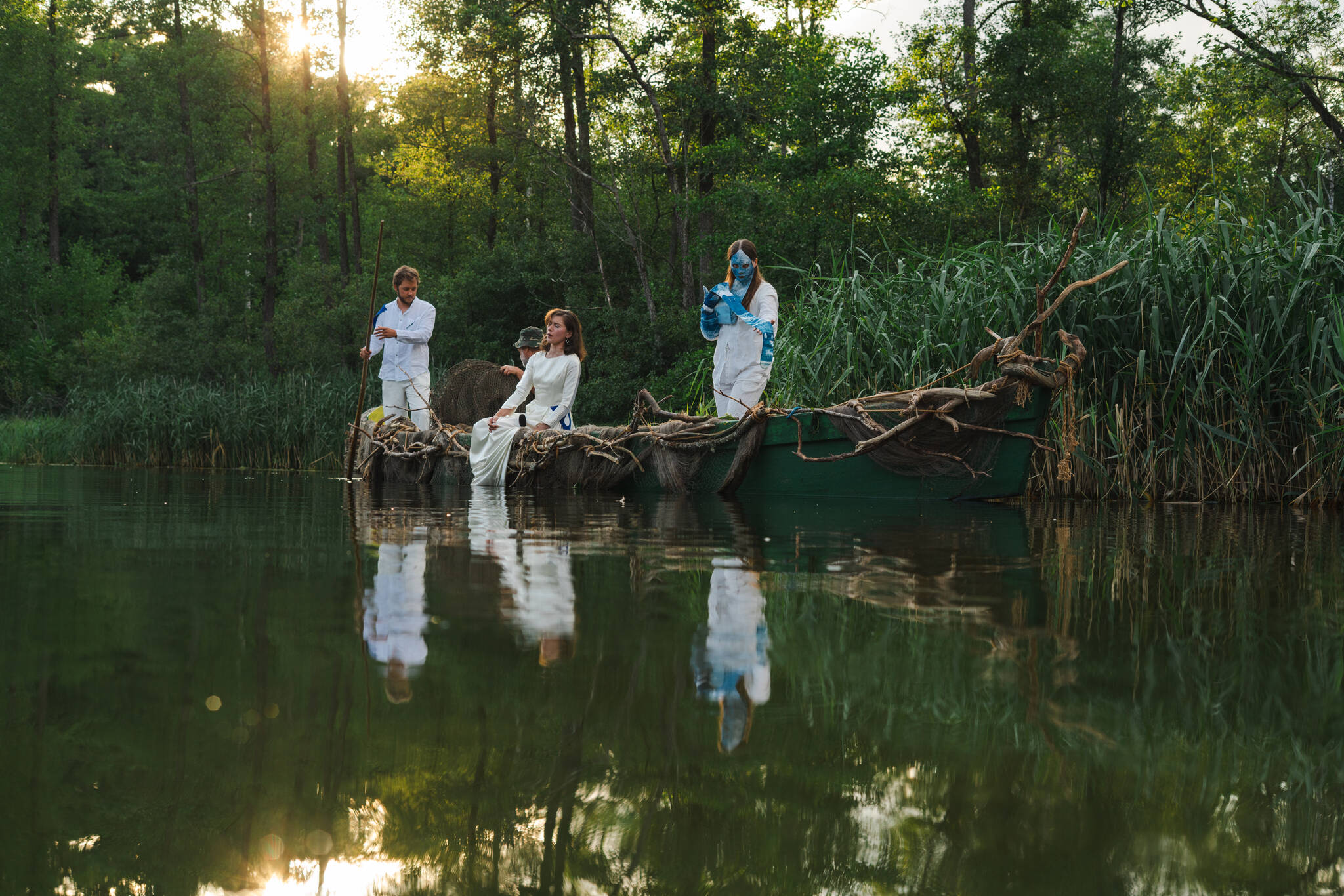
The event unfolded simultaneously on the water and along its banks. A slowly moving boat became a mobile element of the composition, while performers appeared at different points along the route. The audience could observe successive situations from the riverbank, moving along the river at their own pace. It was not a linear narrative or a traditional theatrical performance, but a dispersed performative structure whose course was shaped by the specific space.
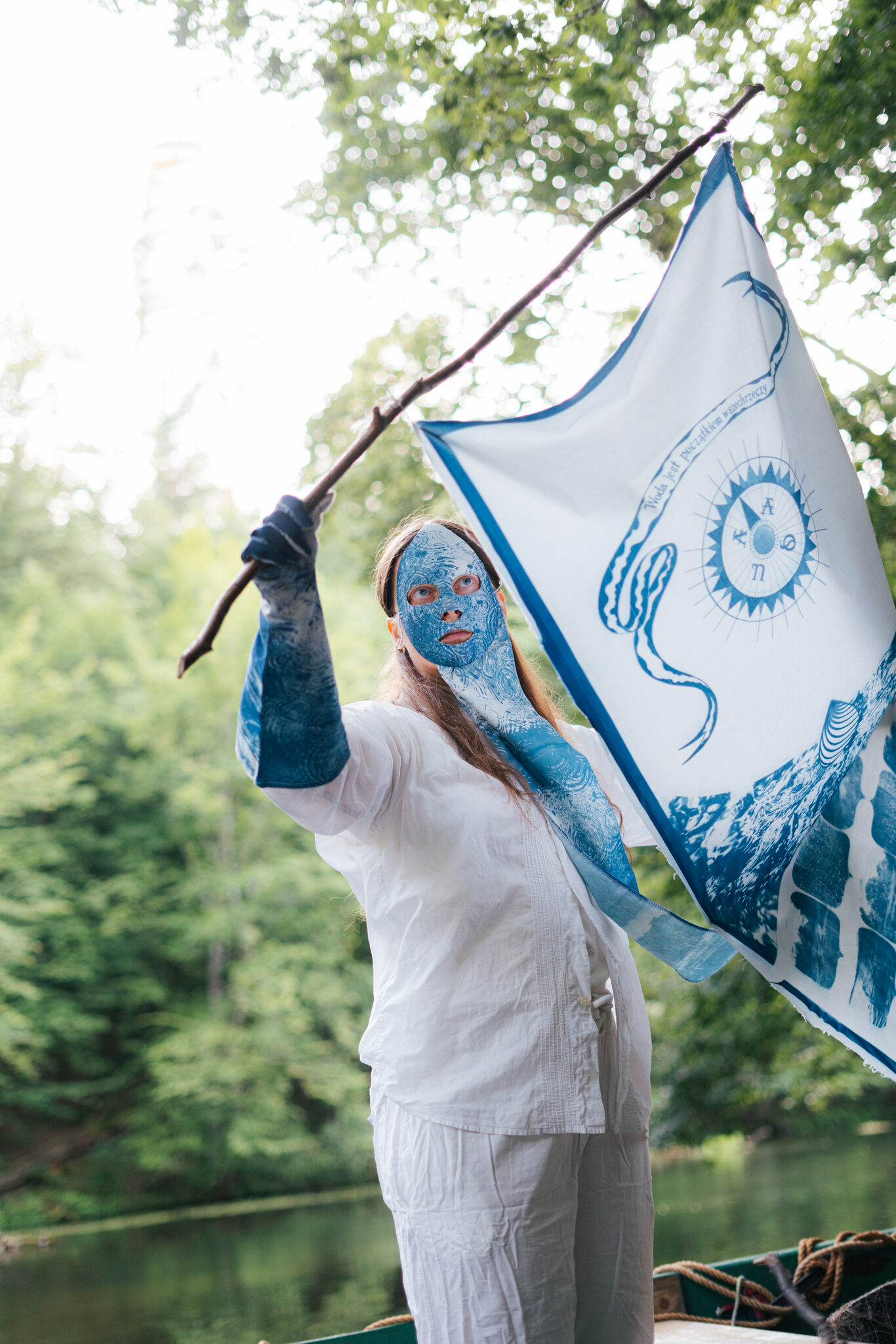
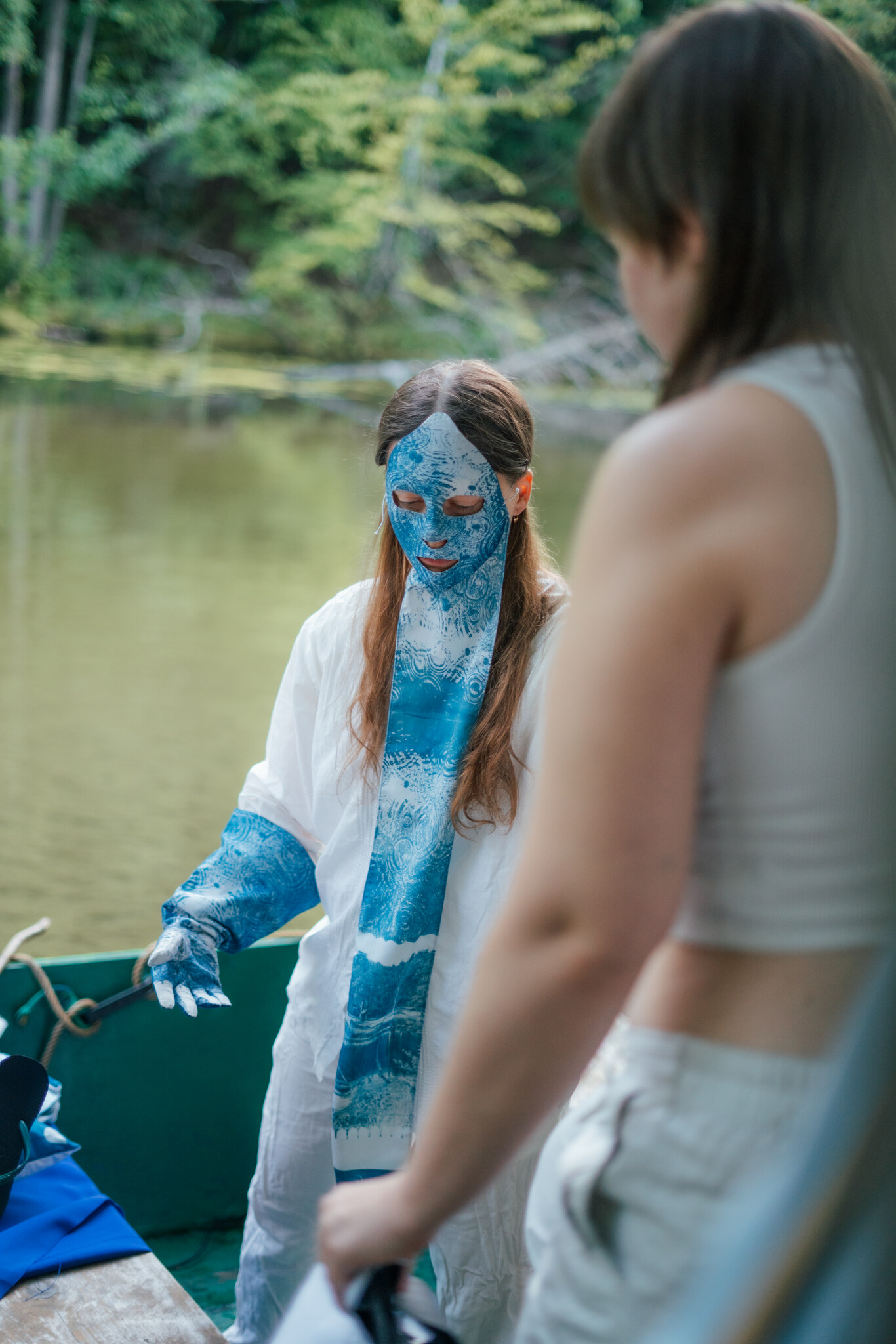
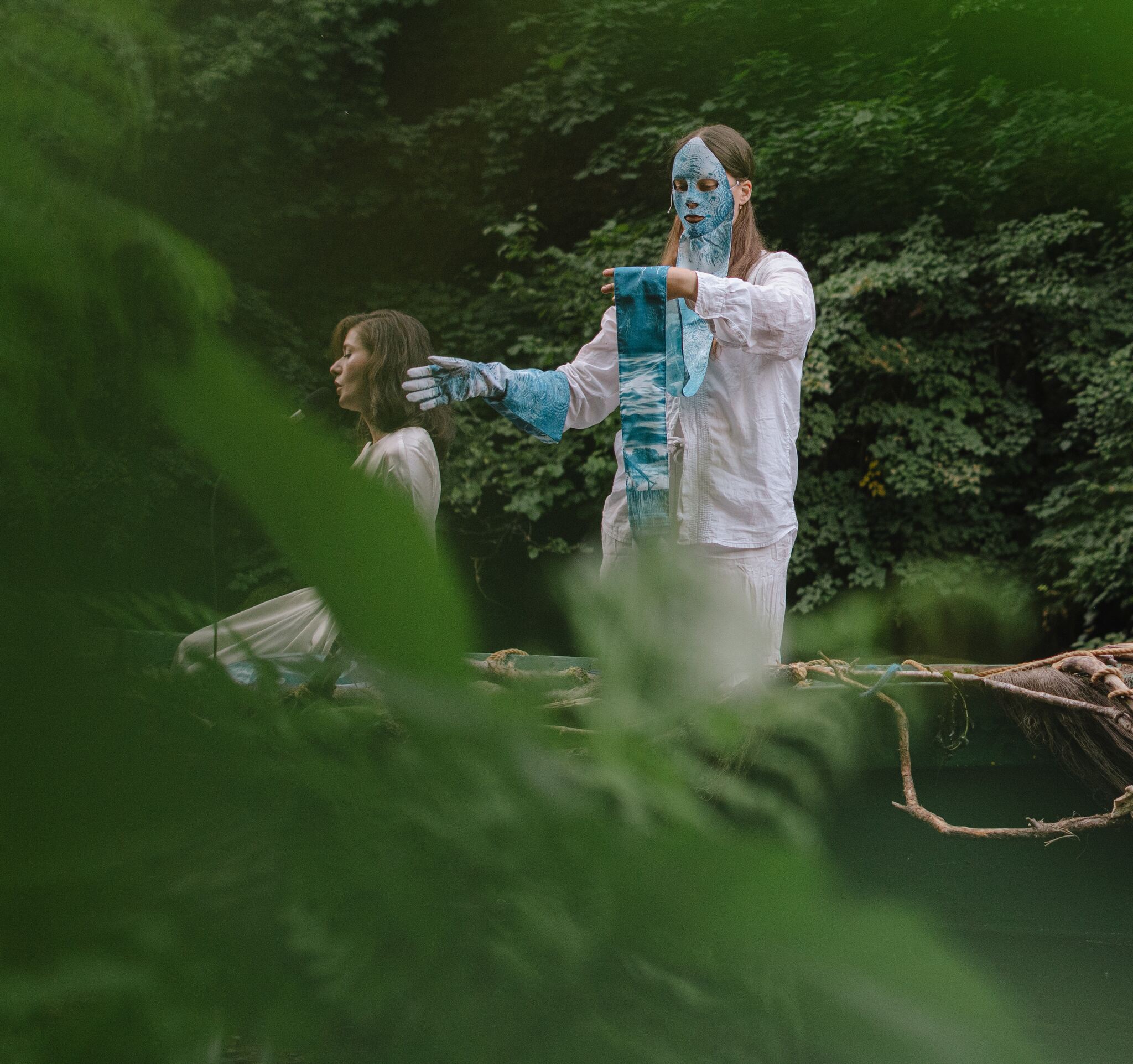
The point of reference for the event was the figure of the Spirit of Water, which I have been developing since 2024. Its origins lie in Slavic beliefs associated with the cult of water and beings inhabiting aquatic ecosystems, including the Wodna Panna, Rusałka, Boginka, Dziwożona, Wiła, and Brzegina. The figure is not an attempt to recreate a particular mythological character. Rather, it has become a contemporary symbolic embodiment of water and a way of entering into a relationship with the landscape.
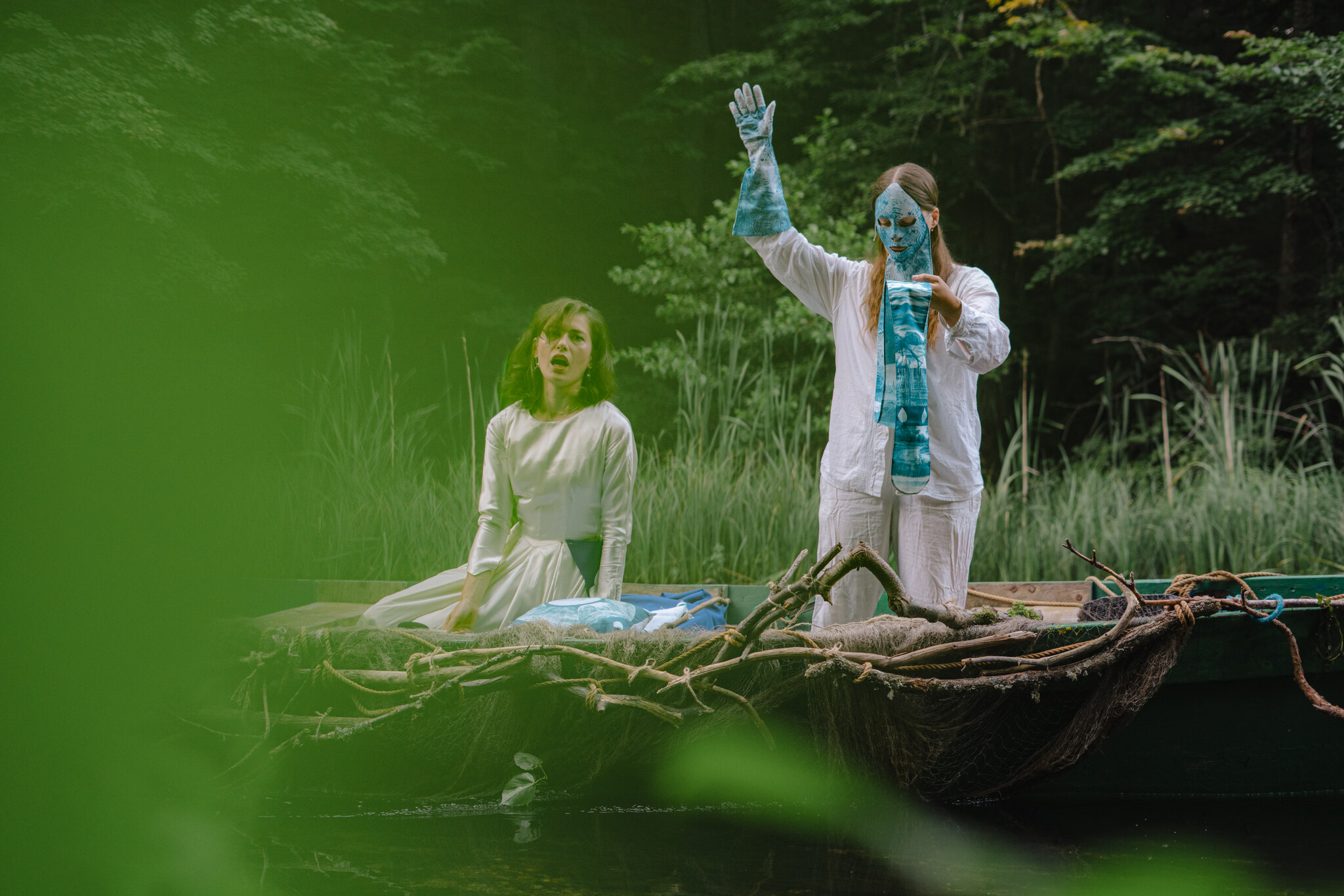
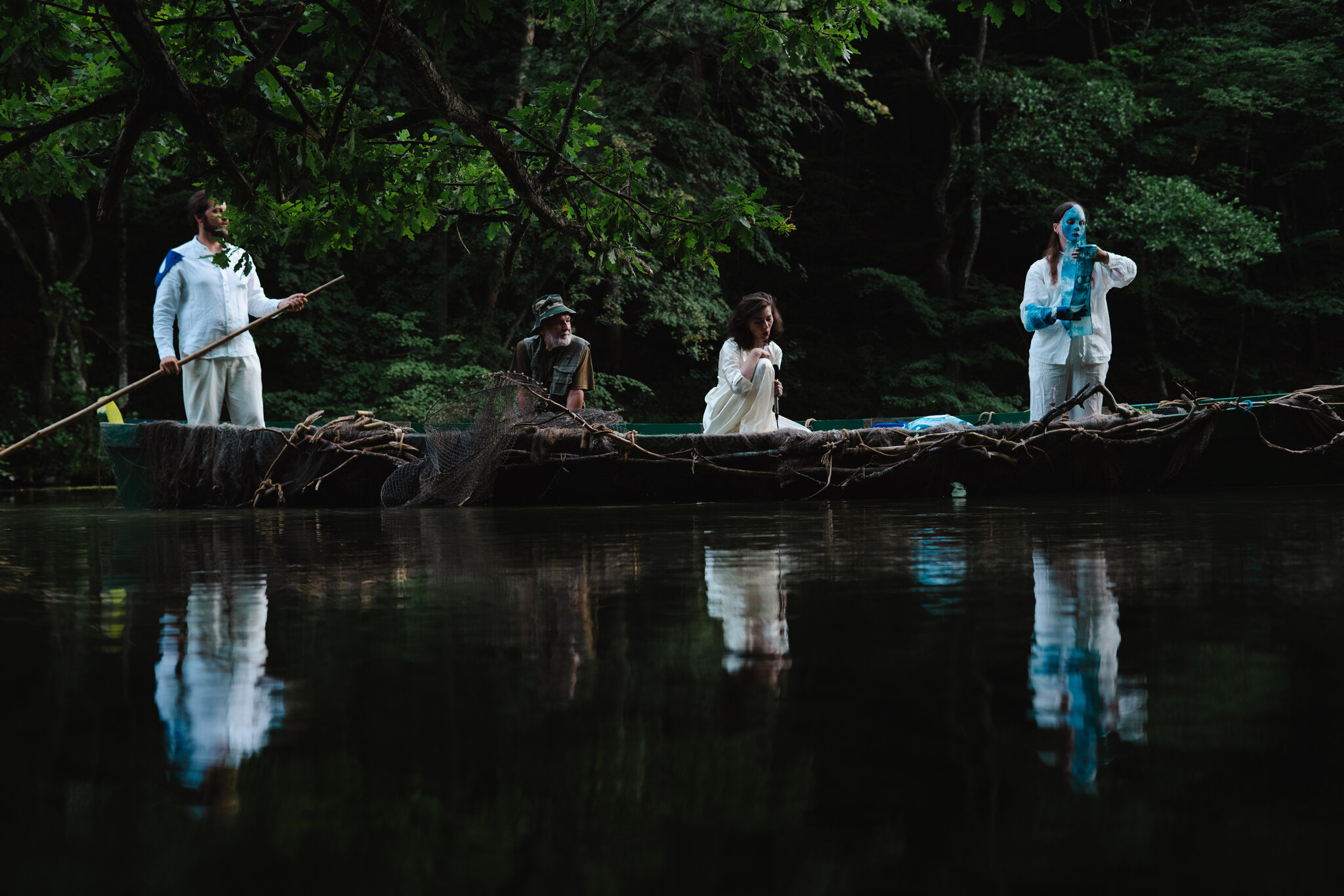
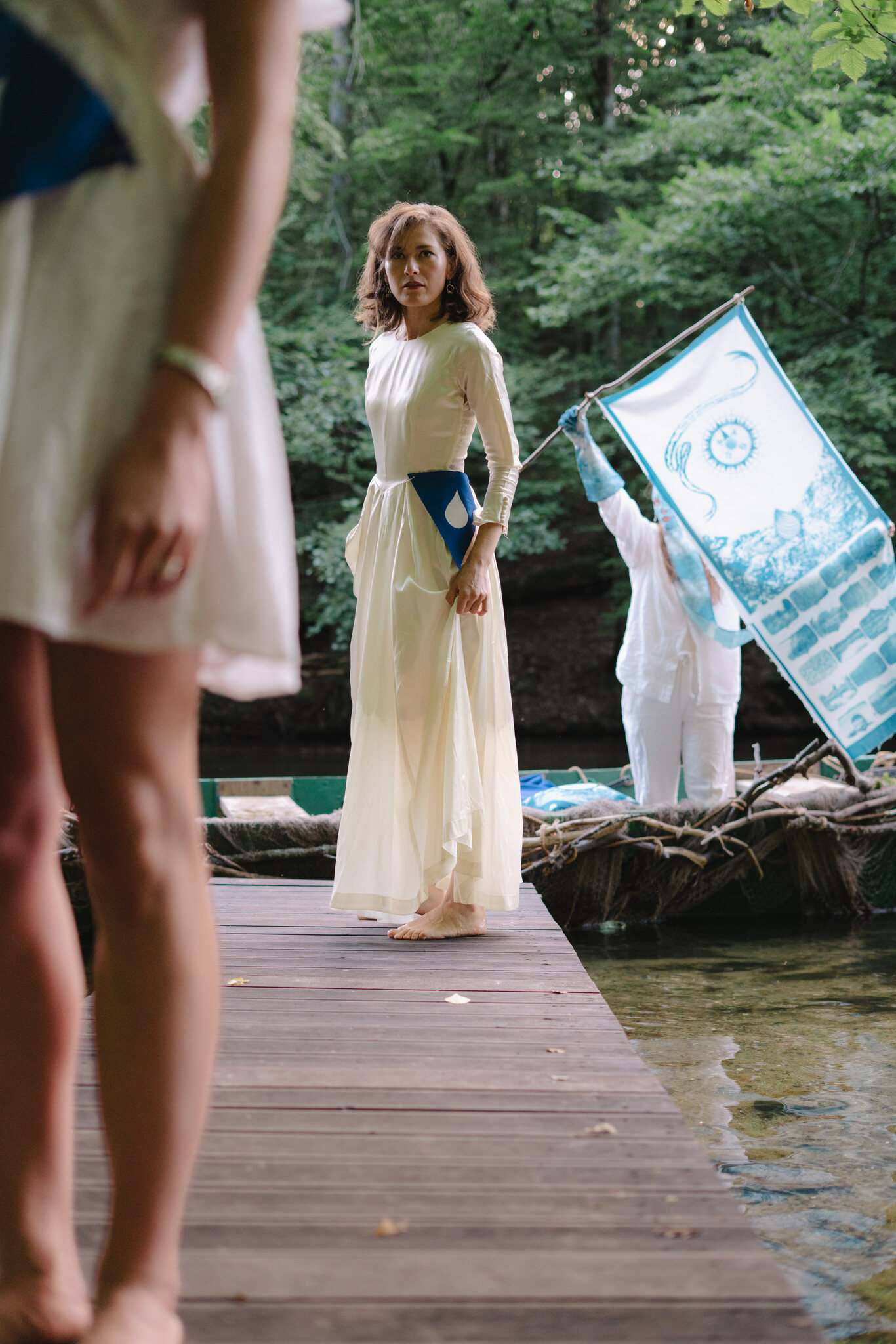
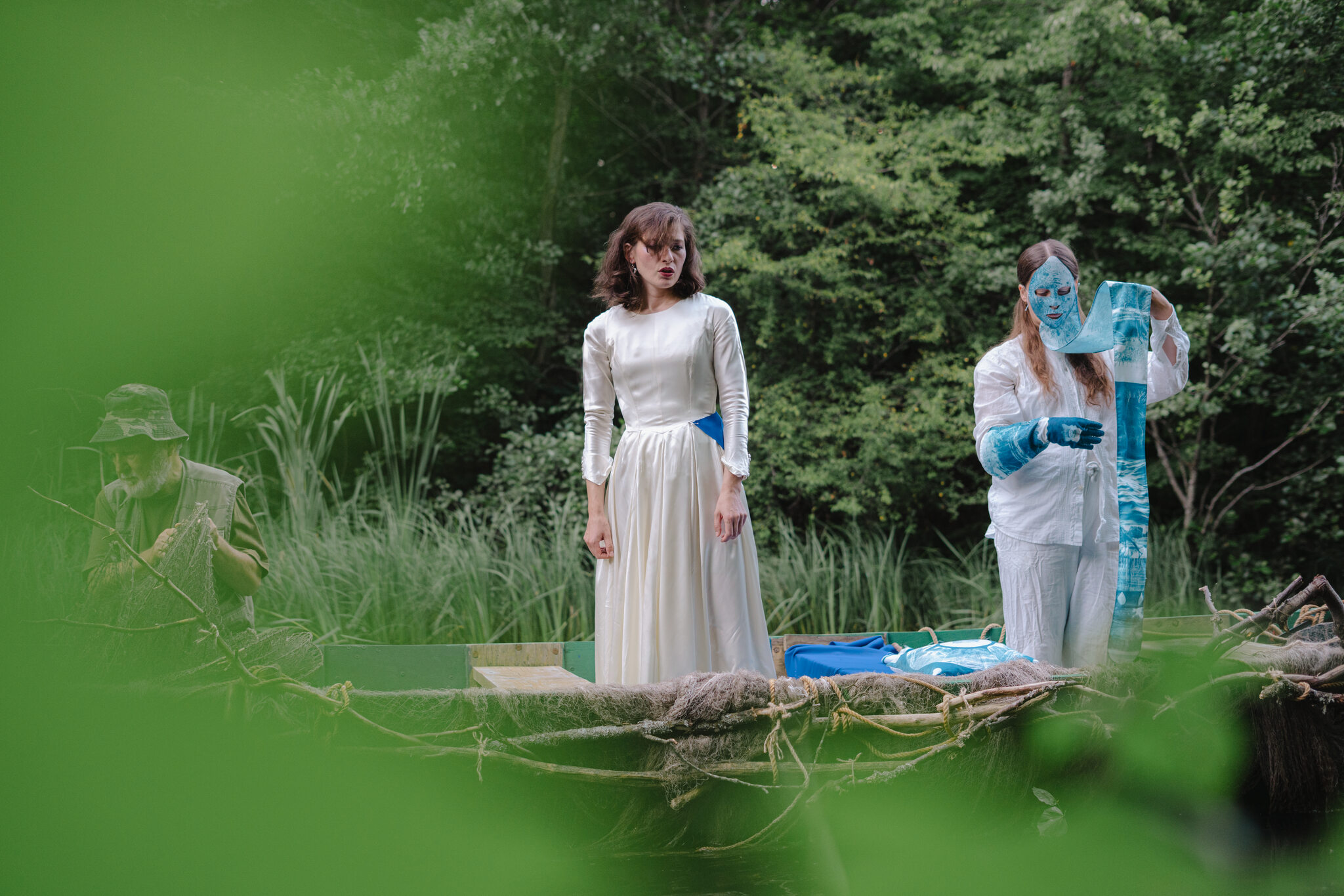
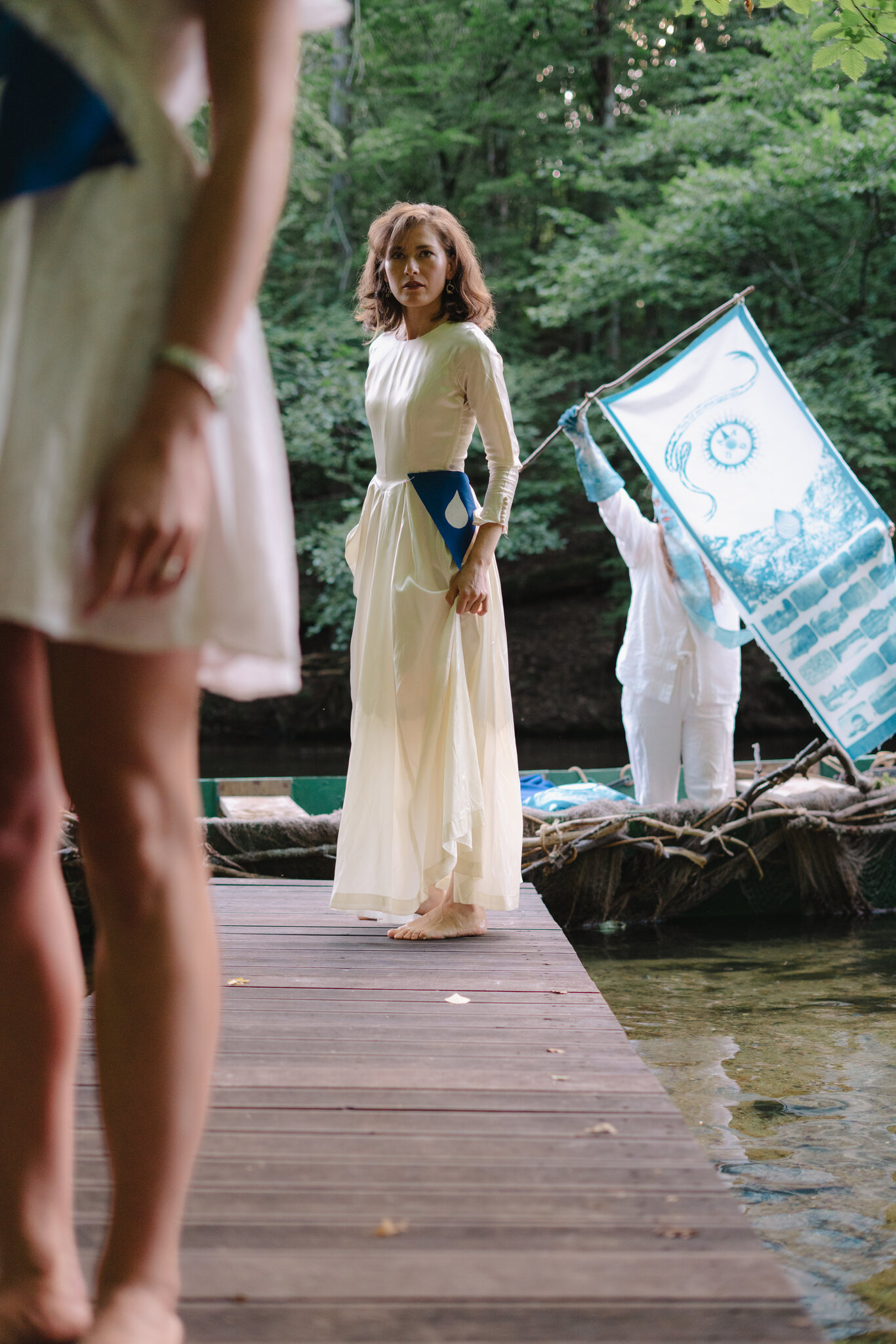
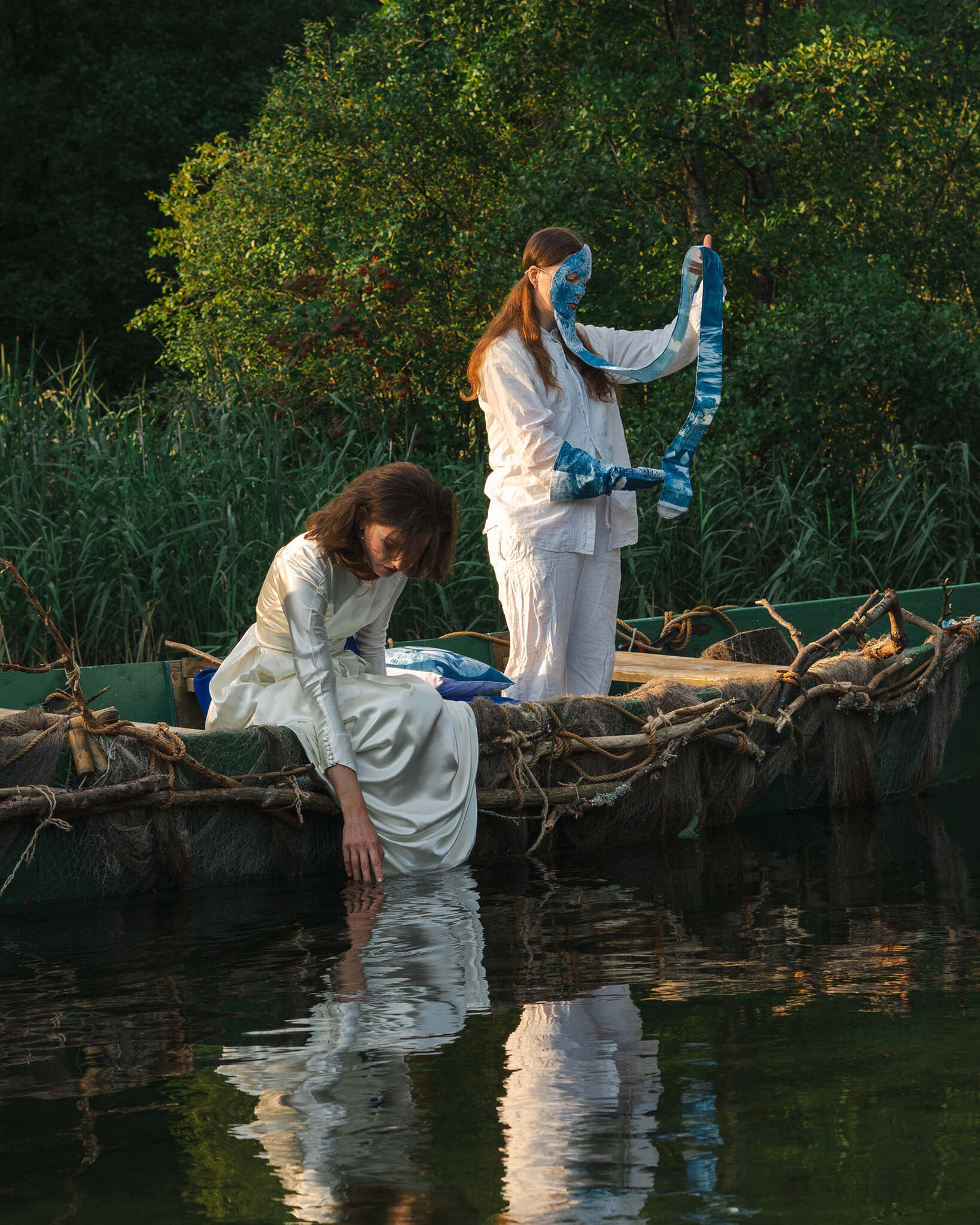
The mask, glove, cushion and flag of the Spirit of Water, made using the cyanotype technique on cotton, formed part of its presence. The flag bears the phrase “Water is the beginning of all things”, attributed to Thales of Miletus, and refers to water as a common element shared by all forms of existence, beyond human borders and divisions.
Between Myth and Landscape
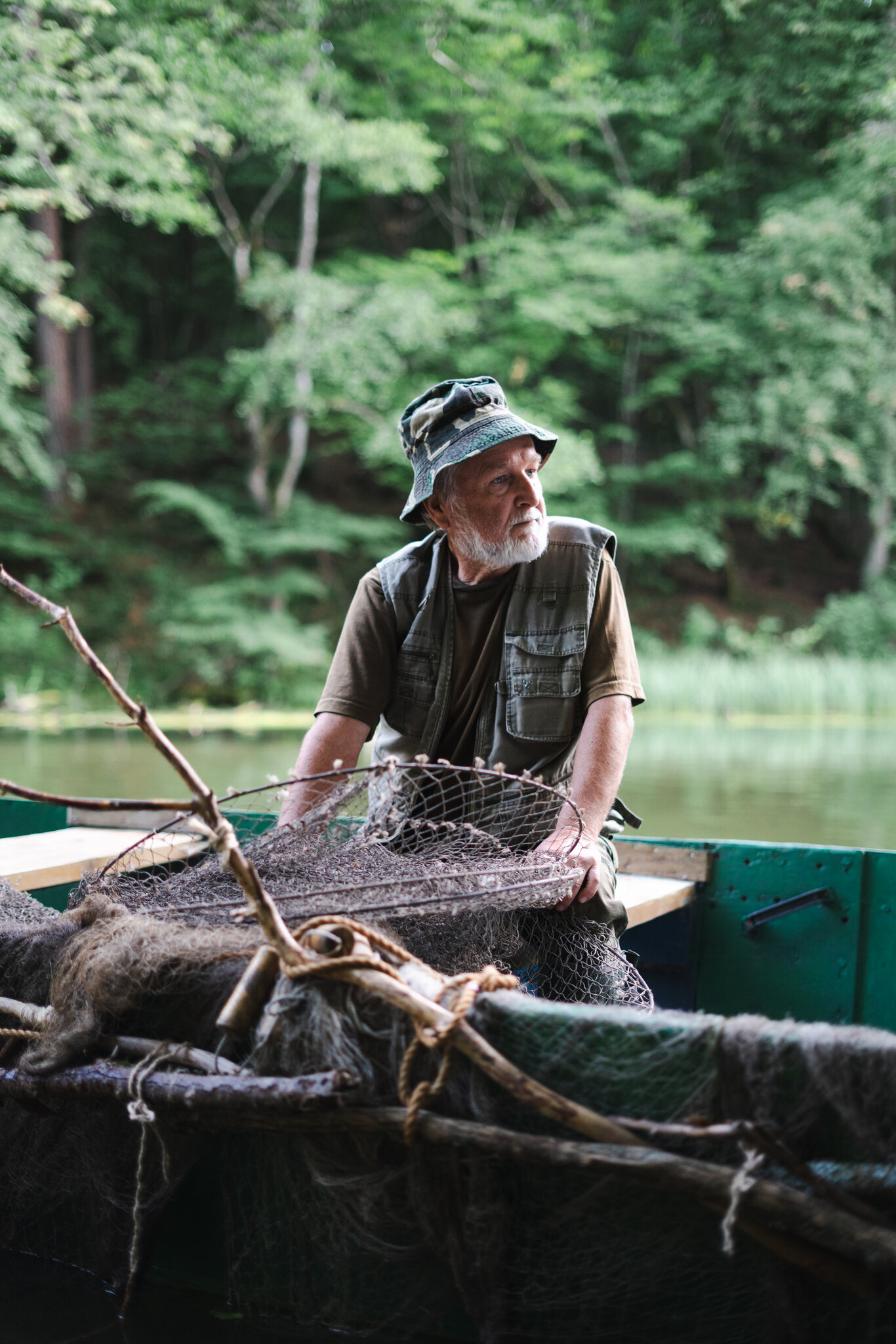
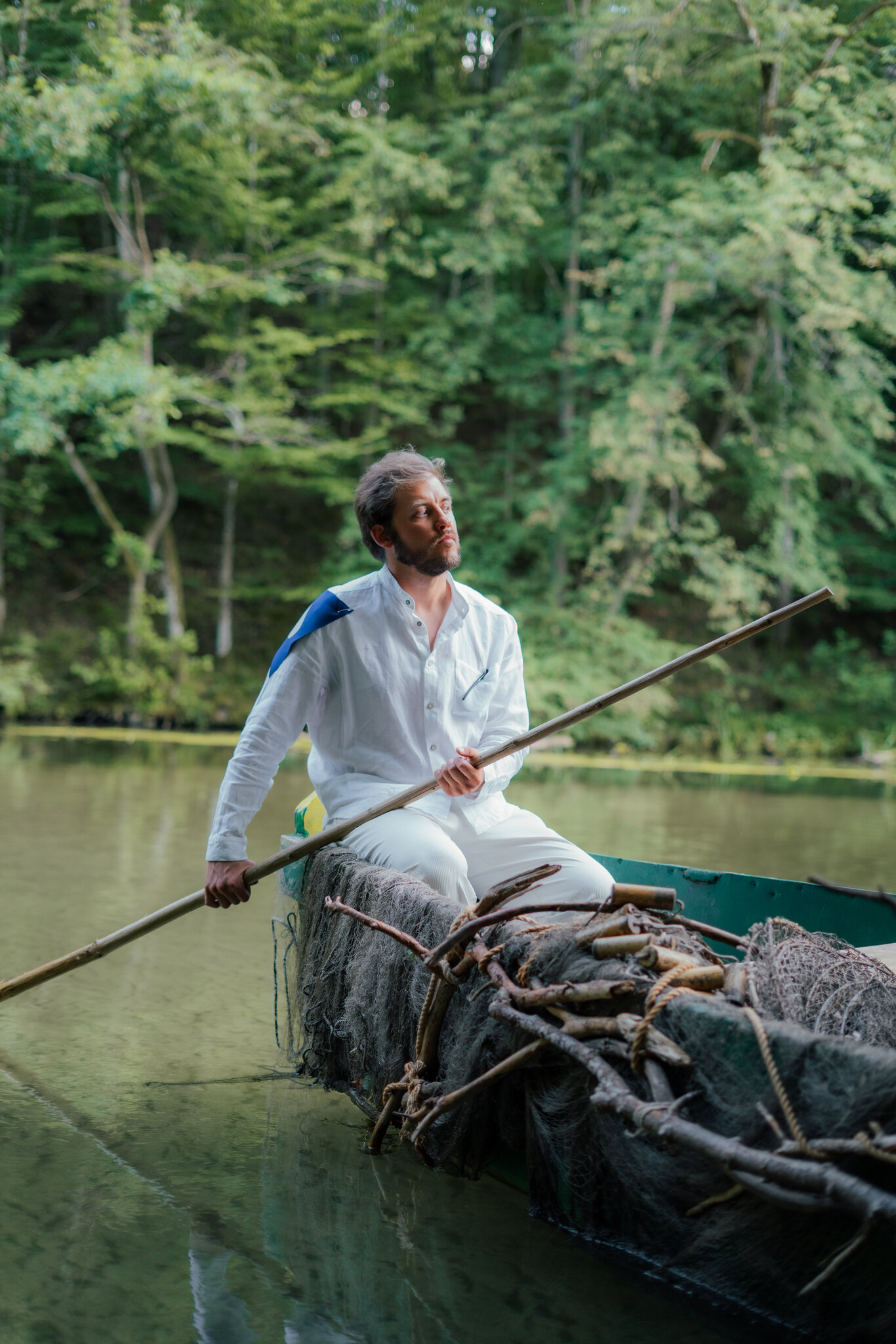
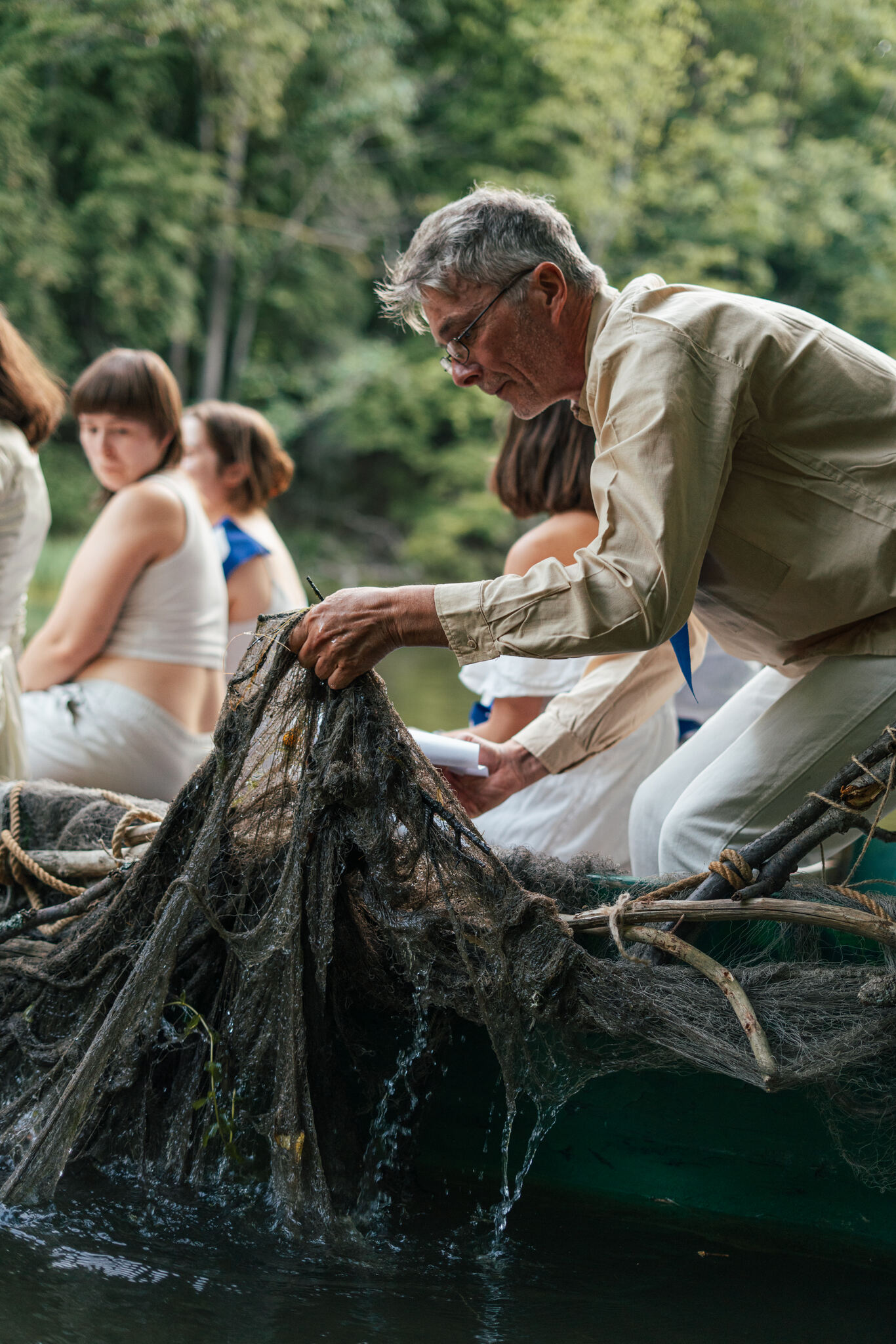
The boat was wrapped in old ropes, branches and traditional fishing nets. Its appearance evoked the image of a boat emerging from another world, a space where water deities and demons are still alive. At the same time, a fisherman was present on board, carrying out real activities associated with his work. An element of everyday life thus encountered the layers of myth and imagination.
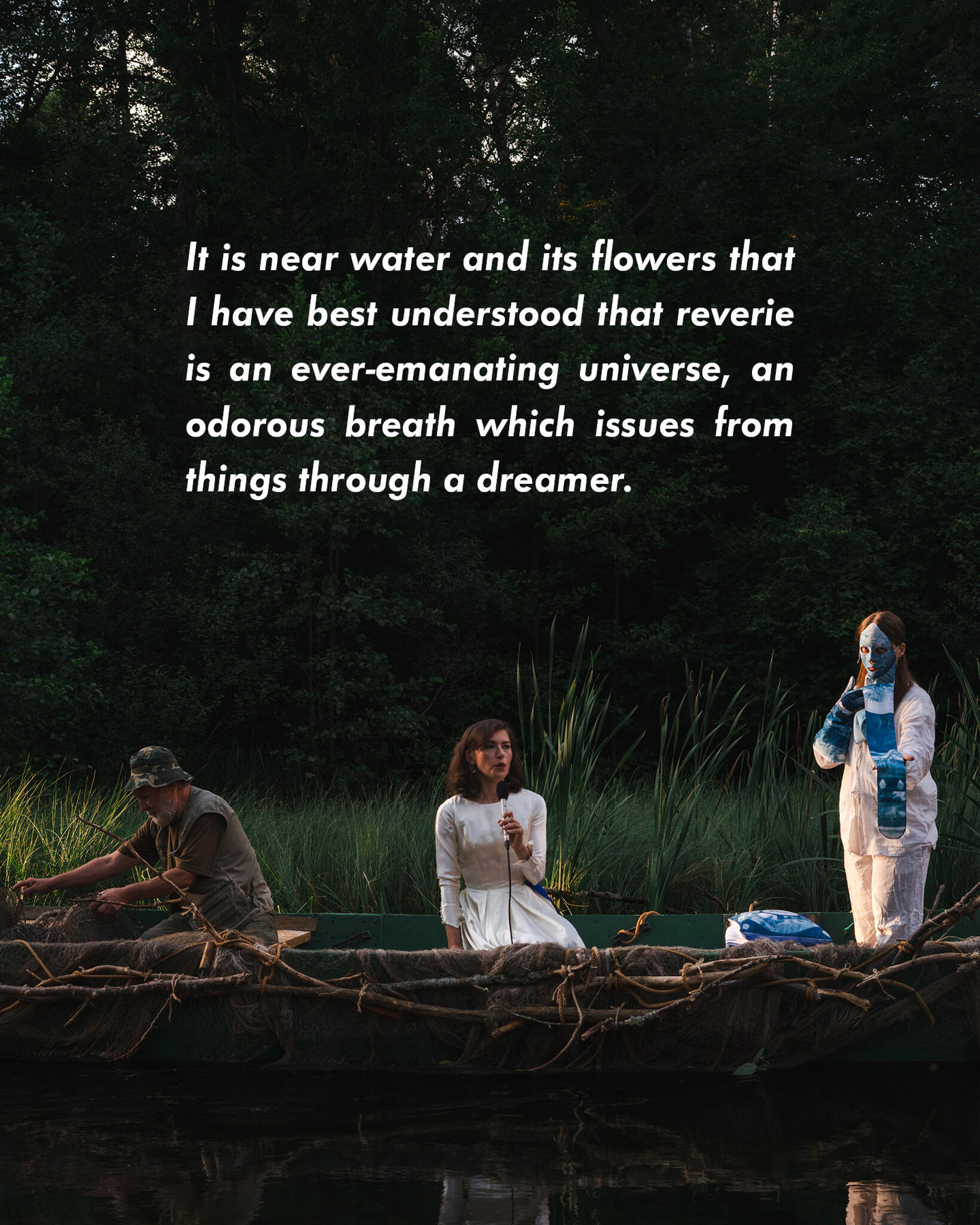
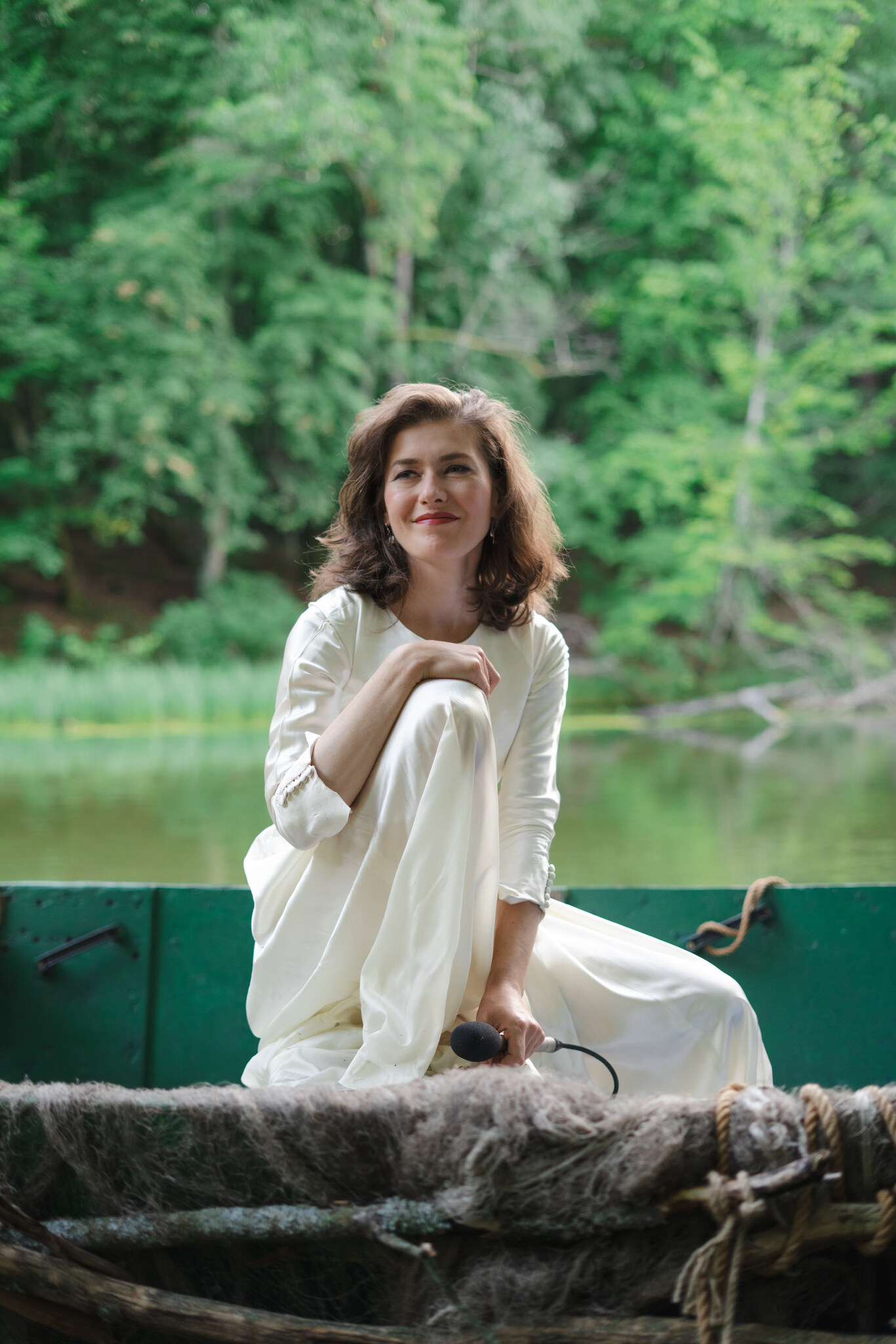
The boat carried the voice of opera singer Bożena Bujnicka. Her repertoire drew from European vocal music in which nature, the elements, emotionality and the experience of the human voice become intertwined. The singing did not illustrate the actions or texts, but functioned as an autonomous sonic layer of the event.
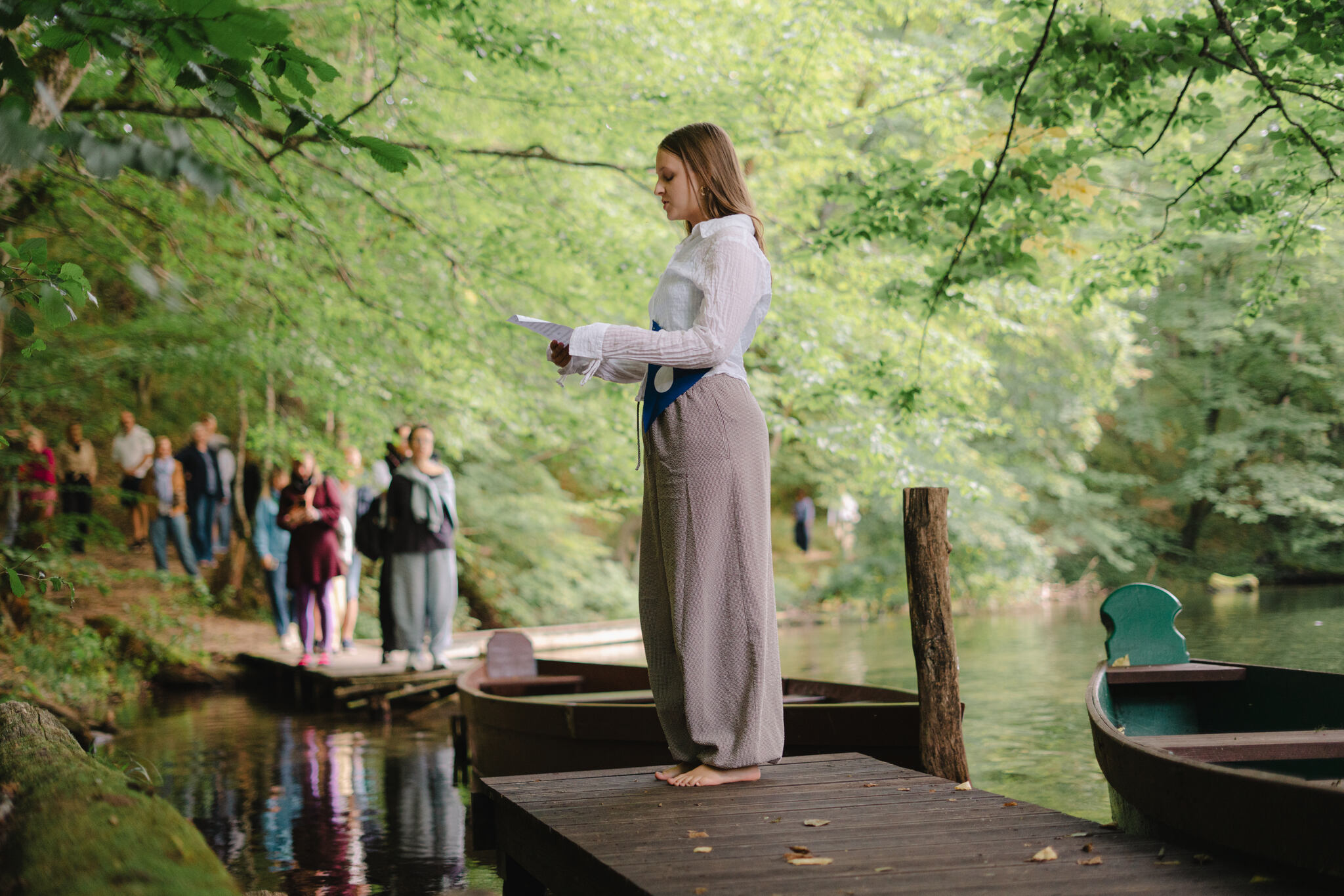
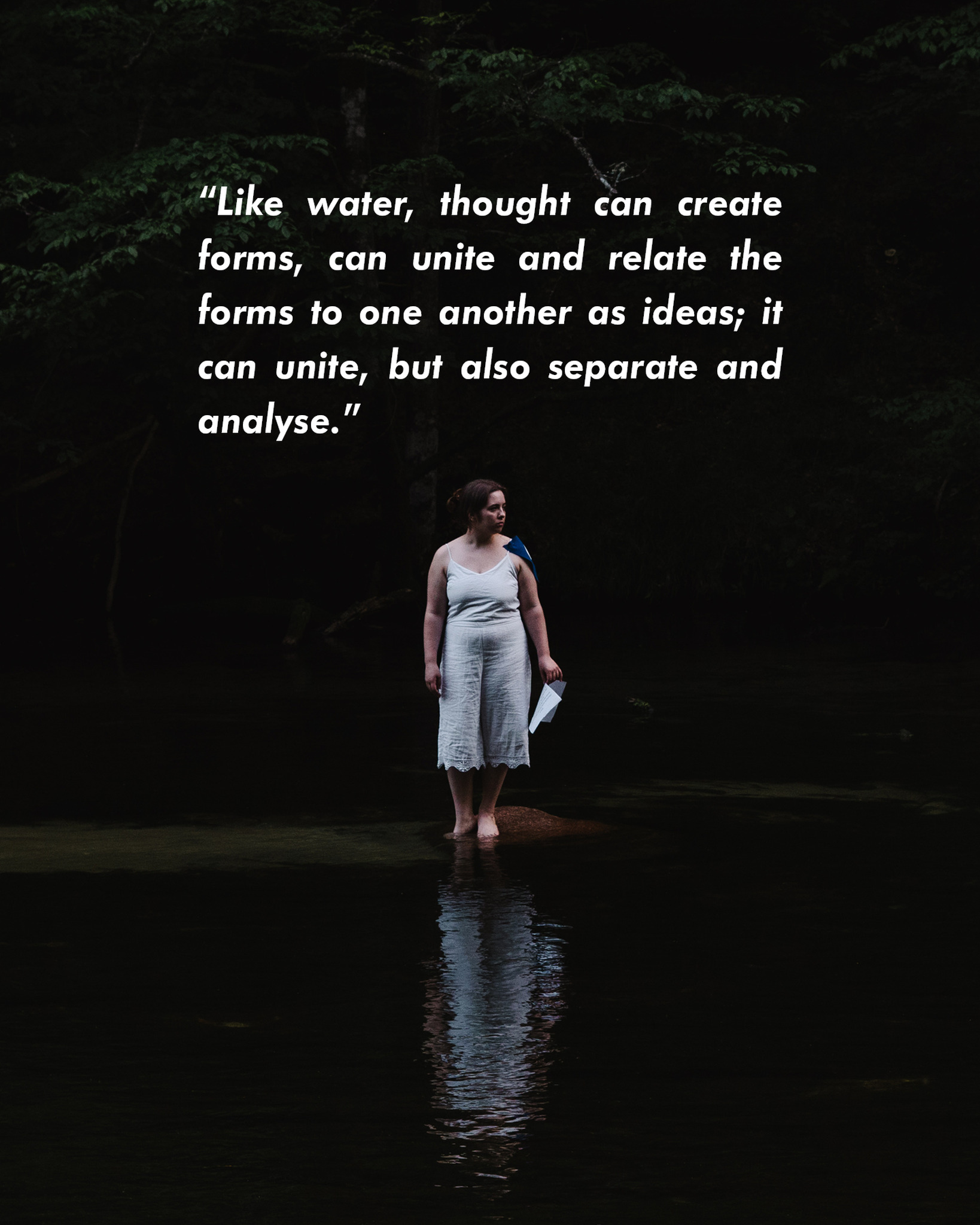
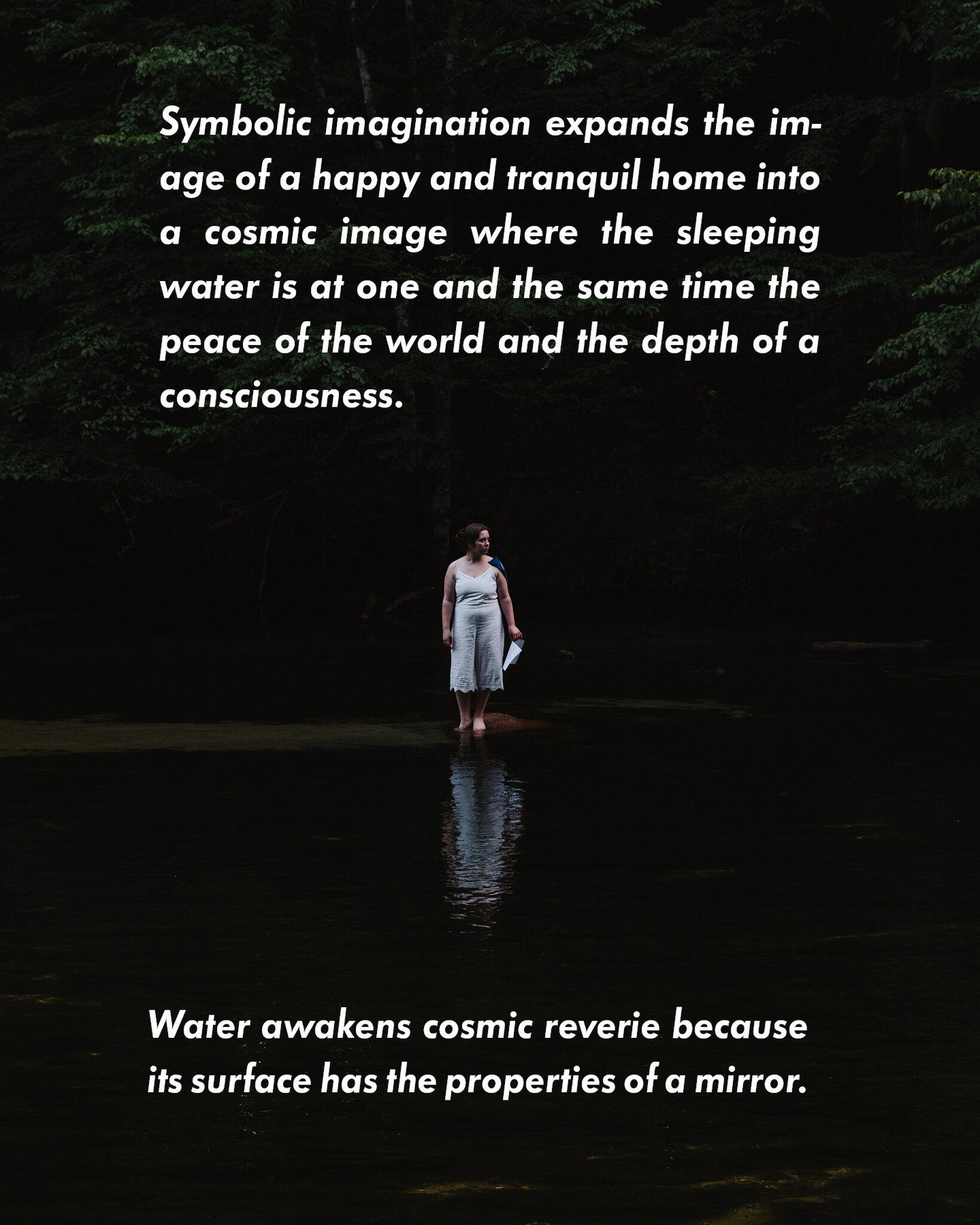
A second layer consisted of texts spoken by performers positioned along the riverbank. The selected fragments represented different ways of describing and understanding water: from poetic and symbolic imagination, through philosophical reflection, to contemporary consideration of the relationship between humans and the world and the environmental crisis. Among the texts were fragments by Gaston Bachelard, concerning water, imagination and reverie, as well as Theodor Schwenk, exploring connections between the movement of water and processes of thought. Other texts addressed ecology, interdependence and the interconnectedness of the living world. They did not form a single narrative. Their meanings overlapped, creating a polyphony of different perspectives.
In the finale, this polyphony was reduced to individual words associated with water: its forms, places of occurrence, movements, properties and actions. Spoken one after another by performers dispersed through the space, the words formed a spatial composition in which language became another material for working with the landscape.
Site-Specific Practice
The project relates to contemporary artistic practices concerned with site-specificity, ecology, relational art and more-than-human perspectives. These approaches move away from treating the environment as a neutral backdrop for an artwork. Instead, the site becomes material, context and an active participant in the creative process.
In Spirit of Water. The Body of the River , the river was not a stage set. Its current, vegetation, sounds and the rhythm of the boat's movement influenced the course of the event.
Water appears here simultaneously as matter, element, living environment, object of cultural worship, source of imagination and a force connecting different forms of existence. By combining performance, voice, objects, text and observation of the site, the project attempts to shift the perspective from the human looking at the landscape towards an experience in which the human being is one of its elements.